
Michelle Blatt
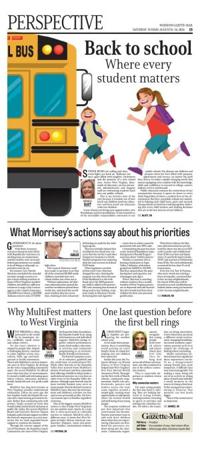
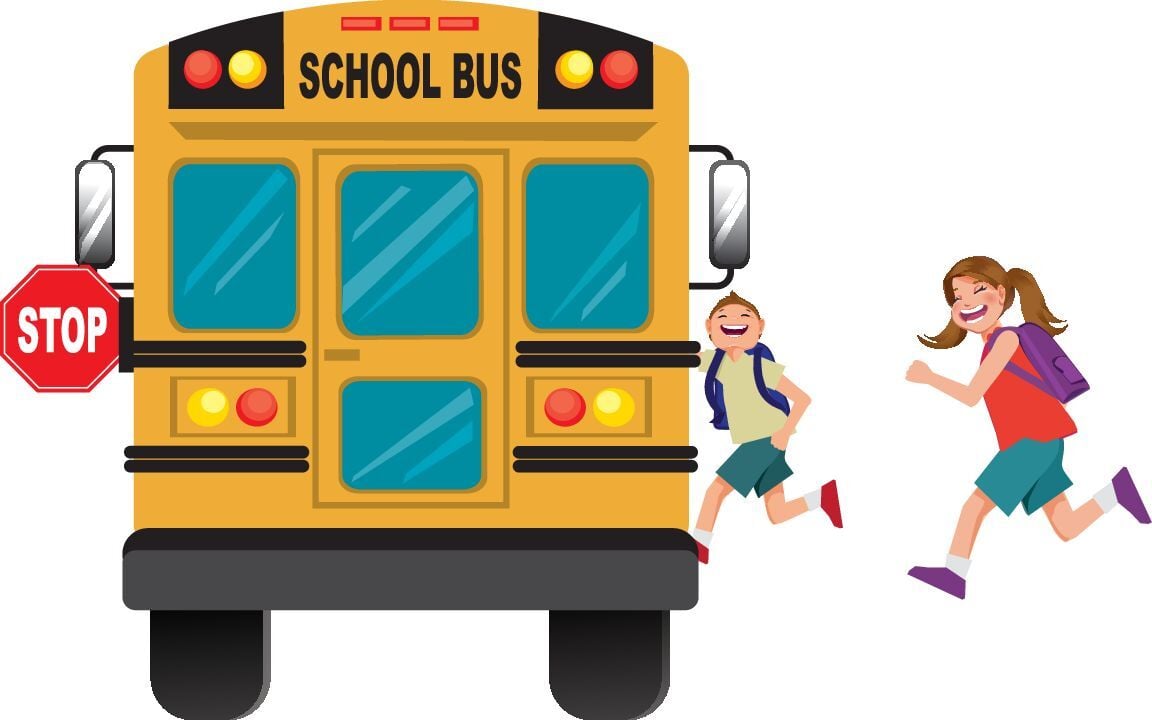
School buses are rolling and classroom lights are back on. Hallways are once again filled with laughter, excitement and the promise of a new school year. Across West Virginia, thousands of educators, service personnel, administrators and support staff are welcoming students back into our public schools.
This is my favorite time of the year because it reminds me of how much our children need our educators and how much our educators value our children.
A new school year brings new opportunities, new friendships and new possibilities. It also reminds us of the incredible responsibility entrusted to our public schools. We educate our children and prepare them for lives filled with purpose, opportunity and success, no matter the path they choose. In today's rapidly changing world, that means equipping every student with the knowledge, skills and confidence to succeed in college, careers, military service and beyond.
Public education remains the cornerstone of our communities because it opens its doors to every child. Regardless of where a student lives or the circumstances they face, our public schools are committed to helping each child learn, grow and succeed. Strong schools are built by working together, believing that every child matters and making decisions that are in the best interest of our children.
Many of our students arrive at school carrying challenges that extend far beyond the classroom. More than half live in poverty, and many face food insecurity, housing instability, trauma or other family hardships. These realities remind us that schools are more than places of learning. They are often a sanctuary where students find caring adults, encouragement, stability and hope. For some children, the most nurturing words they hear are from those who stand at school doors, along hallways and in classrooms.
Every day in our state, nearly 38,000 teachers, service personnel, administrators, counselors, bus operators, cooks, custodians, aides and other school employees come to work with a shared purpose: ensuring every child feels safe, supported, valued and ready to learn.
This commitment makes a difference. We should take time to recognize the extraordinary work taking place every day in classrooms across West Virginia. While there is always room to improve, there is also much to celebrate.
A recent Harvard and Stanford University study ranked West Virginia sixth in the nation for mathematics growth and eighth for reading growth, and Upswing Lab recognized our state as one of only four states to achieve three consecutive years of literacy proficiency growth.
Our nationally recognized Career Technical Education programs prepare students for high-demand careers, our universal pre-K system gives young learners a strong start, and West Virginia recently became the first state in the nation to develop a comprehensive Artificial Intelligence and Digital Science Framework.
These accomplishments reflect the dedication of our education community, business and industry partners, policymakers and countless others working together to help every child succeed. Preparing students for the future is not the work of schools alone; it is a shared responsibility and one of the greatest investments we can make in our children, our communities and the future of the Mountain State.
As another school year begins, I encourage every West Virginian to celebrate the educators and school employees who make these moments possible. This should be a time to put our adult issues and problems aside and, instead, think about how we can support the mission of our schools.
Together, we can ensure every child is allowed to learn, grow and succeed.
Public education is more than a system. It is a promise that all children matter.
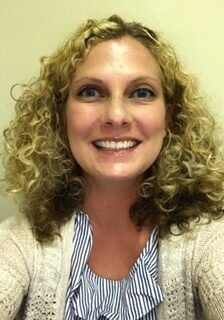
Michele L. Blatt is the superintendent of West Virginia Schools.Â
Gazette-Mail columnist Phil Kabler.
Government is all about priorities.
With finite resources, resources that grow more finite with Republicans’ insistence on slashing taxes on corporations and the wealthy, state, local and federal governments are unable to be all things to all people, so priorities must be set.
For instance, Gov. Patrick Morrisey concluded the state did not have enough resources to give school clothing vouchers to many of West Virginia’s neediest children, but did have sufficient resources to stage a July 4 extravaganza at the Capitol, featuring a $350,000 Ferris wheel, a $150,000 Alabama concert and a $775,000 light show.
If he wanted, Morrisey could have made it a priority to see that all of the estimated 80,000 needy children statewide have new school clothes, but chose not to.
Without explanation, the Morrisey administration opened the voucher enrollment period three weeks late, and closed the enrollment window after just seven days, claiming to have exhausted all funding set aside for the clothing program.
Morrisey initially claimed that enrollment was closed over concerns that the cost for it and other Temporary Assistance to Needy Families programs was outpacing what the state receives in federal TANF funds.
When legislators concluded that wasn’t true, Morrisey changed his tune, claiming the program was shut down because of the likelihood it is rife with fraud, since the $200 payment per child is added to the parent’s EBT card, meaning that instead of being used to buy clothing, recipients could, in Morrisey’s words, be buying beer and cigarettes — items that in reality cannot be purchased with state EBT cards.
Criminalizing the poor has been a time-honored Republican trope, dating back to Ronald Reagan’s nonsense about "welfare queens."
Notably, as someone who is hosting a fundraiser in Napa Valley, California, with tickets going from $10,000 to $25,000, Morrisey opined about the poor buying beer and cigarettes, not champagne and cigars.
Worse, Morrisey is asserting without evidence that a sizable number of West Virginia parents are so depraved and cold-hearted that they would steal from their children for their own personal gratification.
What little evidence the Morrisey administration has put forward for abuse was the use of EBT cards to make cash withdrawals from ATMs near bars and liquor stores. It’s perfectly legal to make TANF cash assistance withdrawals from ATMs. The cited withdrawals accounted for less than 1% of all transactions.
Even Sen. Eric Tarr, R-Putnam, who never struck me as being a fount of empathy, countered that in low-income neighborhoods, the closest ATMs may well be located near such establishments. Indeed, banks rarely put branches in low-income neighborhoods.
While Morrisey was quick to launch an investigation into the school clothing voucher program while lacking specific instances of fraud and abuse, he has shown no interest in investigating the significant evidence of misuse and abuse of the state’s Hope Scholarship voucher program which provides public funds for children to attend private schools or homeschooling. In May, the Hope Scholarship Board was forced to issue a voluminous list of unallowable expenses, a list that includes witchcraft herbs, live animals, ammunition and chicken coops costing in excess of $400.
Could it be that because recipients of the $4,900 Hope vouchers are primarily middle-class or higher, Morrisey has no interest in investigating potential abuse of that program?
Likewise, Morrisey and the Legislature could invest in upgrading water systems in southern West Virginia so that thousands could have potable water to drink and bathe in, they just chose not to make it a priority.
No wonder that, as the Gazette-Mail’s Mike Tony reported, local residents were highly skeptical of Morrisey’s 10-stop “water listening tour� — a skepticism no doubt heightened by the fact that the times and locations of the governor’s appearances were not made public in advance.
Editor's note: This report was supported by the Pulitzer Center and is part of a Gazette-Mail series on drinking water quality in West Virginia.
On the tour, Morrisey claimed that, during his tenure, the state had made $174 million in grants and loans that can be leveraged for a total of $550 million for water and sewer projects. However, as Tony reported, the state Water Development Authority lists just 23 grants totaling $15.2 million, far short of the estimated $1.73 billion needed to bring the state’s 414 water systems up to par.
Obviously, a number that big requires federal intervention. President Joe Biden’s Infrastructure and Jobs Act allocated $487 million for water infrastructure in the state, but Donald Trump paused that funding shortly after taking office in 2025, and overall funding for the act is set to expire Sept. 30, with no assurances Congress will extend it.
While state government has been chintzy when it comes to funding water projects, it had no problem coming up with a $50.9 million unsecured loan to Omnis Energy to convert a coal-fired power plant in Pleasants County into a hydrogen production facility – a project that relied on unproven technology that many experts dismissed as being untenable.
Perhaps not surprisingly, Omnis Energy declared bankruptcy last month, so that $50.9 million that could have at least made a dent in the southern West Virginia water crisis is likely gone with the wind.
Priorities.
It appears members of the Republican supermajority are beginning to realize that West Virginia voters are fighting mad over legislation passed in 2025 giving data center operators free rein to locate facilities wherever they wish. They're also allowed to keep details of the operations secret, and half of the resulting tax revenue is directed to a fund to give more tax breaks to the wealthy.
Thus, Morrisey held a news conference this week to unveil seven “guiding principles� for state recruitment of the massive data centers. Naturally, it amounted to a series of platitudes which have no weight of law and do nothing to change the legislation. Nor did it do anything about legislative rules adopted this session for enforcing the law, in which the Republican supermajority rejected all amendments designed to make the legislation more palatable.
While Morrisey and data center attorney and House Speaker Roger Hanshaw, R-Clay, stuck to the script for the charade, Senate President Randy Smith, R-Preston, seemed to say the quiet part out loud in his remarks, stating, “Everyone knows these data centers have been a huge problem.�
Yes, members of the Republican supermajority are recognizing that the data center law is an albatross around their necks, and voters are outraged that they have no say in where these massive, noisy, pollution-spewing, energy and water hogging complexes are located — facilities that may well leave them with a reduced quality of life, higher electric bills and water shortages.
As I’ve said before, this will be the top issue in November legislative races.
Speaking of taxes, it’s official: State revenue collections failed to grow sufficiently in fiscal year 2025-26 to trigger a personal income tax cut next year under the 2023 law designed to phase out the tax.
In fact, the state missed the trigger by nearly $440 million.
Using a somewhat complicated formula, the benchmark is fiscal 2018-19 general revenue, excluding volatile severance tax collections, adjusted for inflation.
That works out to $5.598 billion for fiscal 2025-26, but actual 2025-26 revenue collections, minus severance taxes, came in at only $5.159 billion.
Indeed, revenue collections have only hit the benchmark once, resulting in a modest 4% cut, out of a maximum of 10%, in 2025.
Falling $440 million short of the benchmark was probably not what then-Gov. Jim Justice envisioned when he signed the tax cut bill into law during a gala ceremony featuring a balloon drop, declaring that was delivering on the “rocket ship ride� he had promised when he first took office. Some rocket ship. Some ride.
Of course, judging by the multiple liens filed against them, the Justice family has found a much more effective way to lower their tax liability: Just don’t pay up.
Finally, kudos to the State Bar Board of Governors and the West Virginia Lawyer Disciplinary Board for standing up against corruption in the Trump administration.
The boards adopted a joint resolution opposing a proposed Department of Justice policy change that would give the U.S. Attorney General authority to unilaterally suspend state bar investigations and disciplinary proceedings against current and former DOJ attorneys.
In other words, Attorney General Todd Blanche would have carte blanche to block any state bar investigations of alleged wrongdoing or unethical behavior by DOJ attorneys. As the Brennan Center For Justice called it, it is the department’s “latest effort to dismantle checks on its abuses of power.�
The joint resolution states, “The attorney disciplinary system of West Virginia is designed to ensure that all attorneys admitted to practice — regardless of their employer or government affiliation — are subject to the same ethical standards and disciplinary processes.�
It concludes, “The undersigned underscore the importance of preserving the authority of the Supreme Court of West Virginia and its disciplinary bodies to carry out their responsibilities without interference, in a manner that assures equal application of ethical standards to all attorneys.�
According to West Virginia Lawyer magazine, the resolution was adopted unanimously, with some members abstaining.
Given the fealty that many legislators and state officials continue to show for Trump, despite his cratering approval ratings, standing up to the DOJ is a rare and welcomed display of fortitude, which one hopes will be an example for others to stand up against corruption in the Trump administration.
Phil Kabler is a semi-retired statehouse reporter. He can be reached at 304-348-1220, or philk@hdmediallc.com. Follow @PhilKabler on X.
David Fryson
West Virginia is often portrayed to the world by its mountains, rivers, coalfields, small towns and urban centers.
Yet the state’s identity is shaped by people who, despite a challenging history, continue to come together across race, culture, faith, age and background to build community. That is why MultiFest is such an important asset to West Virginia. By drawing on the state’s longstanding community spirit, the recent MultiFest 36 offered more than four days of entertainment. It created a visible and welcoming space where culture, education, business, health, family life and civic pride could meet.
MultiFest has long been known as West Virginia’s premier multicultural celebration. Thirty-six years ago, the late Stephen Starks developed the concept after experiencing personal exclusion. Rather than continuing only with protest, Starks created an event that would model multicultural inclusion in public life. Today, the current MultiFest Board and Executive Director Tamara Eubanks solicit broad support to reflect the festival’s importance as a civic institution, but we need expanded future support to continue the mission.
Through the current support of the city of ÂÒÂ×ÄÚÉä, the Kanawha County Commission, the state of West Virginia, the Kanawha Valley Foundation, the Eubanks Family Trust, along with businesses and individual support, MultiFest brings together cultural performances, music, food vendors, educational activities and community programming in an inclusive, family-friendly environment.
The festival’s purpose is rooted in tolerance, goodwill and the celebration of multicultural life. While other festivals in the Kanawha Valley have learned from MultiFest’s history of inclusion and have expanded their offerings, MultiFest still provides a multicultural presence in a way that no other event in the Kanawha Valley duplicates. Although some festivals may be more lavishly funded, none serve as many people with the limited resources MultiFest raises. Because the entertainment and children’s activities are free and no one personally profits, the festival remains open to families regardless of income.
One of the biggest reasons MultiFest matters is that it helps West Virginians see one another more clearly. In a state that is often portrayed as culturally narrow or isolated, MultiFest tells a different story. It shows that West Virginia includes African American communities, Hispanic, Asian and immigrant families, international students, rural residents, urban neighborhoods, faith communities, entrepreneurs and educators. The festival gives these groups a shared public stage.
People can learn about health programs, careers, college pathways, wellness resources and support services while enjoying a festival atmosphere. For young people, seeing colleges and universities, health providers and community organizations in a diverse public space can make opportunities feel more accessible and realistic. MultiFest is not only a place to be entertained; it is a place where families can be informed and encounter pathways to education, employment and healthier lives as often illustrated by the Black-By-God online publication.
MultiFest is also an economic asset. This community festival brings visitors to downtown ÂÒÂ×ÄÚÉä, supports local vendors, creates opportunities for small businesses and increases activity for restaurants, hotels, transportation services and nearby shops. Food vendors, artists, nonprofit groups and local entrepreneurs benefit from access to thousands of people in one place. Because MultiFest is free and family-oriented, it lowers the barrier to participation while still generating economic energy.
The festival’s health and wellness impact should not be overlooked. WVU’s Health Sciences programs, Vandalia Health, Health Right, Inc., and Humana had a presence and role in connecting people with information. MultiFest supports public health by meeting people where they are.
Sundays at MultiFest provide a spiritual emphasis that is more like a family homecoming. It is a beautiful sight to see the churches come together in fellowship and community that is open to all regardless of religious background.
Importantly, MultiFest builds social trust. West Virginia faces real challenges, including population loss, economic transition, health disparities and political division. It is our hope that the state’s colleges and universities will play a larger future role in funding the festival and participating in its events. This is especially true of West Virginia University and West Virginia State University, the state’s two land-grant institutions. West Virginia State University, as a Historically Black College and University, and West Virginia University, as the state’s original land-grant university, should both play outsized roles in supporting MultiFest. Their expanded participation would help each institution fulfill its public mission while connecting directly with the communities they are called to serve.
Because West Virginia needs to strengthen college enrollment, Marshall University and the other institutions of higher education should also have a strong presence at MultiFest. The festival offers a rare opportunity to reach families, first-generation students, adult learners and young people who may not yet see themselves on a college campus. Although state leaders have debated the language of diversity, equity and inclusion, multiculturalism must be understood as an educational and economic advantage. It can expand opportunity, support tourism and help West Virginia compete for talent in a changing world.
Most importantly, MultiFest helps West Virginia tell an enhanced story about who we really are. It shows a state that is proud of its traditions but open to growth and understands diversity as a strength rather than a threat. MultiFest is an investment in community pride, economic vitality, educational outreach, tourism, health awareness and the inclusive future West Virginia deserves.
Pastor David M. Fryson, Esq. is the current President of MultiFest, serves as the Senior Pastor of the New First Baptist Church of Kanawha City and is a national diversity consultant.
Julie Gomez
Across West Virginia, families are preparing for another school year.Â
As we make those preparations, there is something worth putting on every family's back-to-school list: making sure our children feel connected.
Earlier this year, the National Alliance on Mental Illness (NAMI) in West Virginia helped lead West Virginia's first Teen Mental Health Awareness Week. Throughout the first week of March, schools, community organizations, health care professionals, parents and leaders across the state came together around a simple goal: creating more opportunities to talk openly about the mental health and well-being of our young people.
The response reinforced just how important that conversation has become. Parents want better ways to talk with their children about what they are experiencing. Educators see firsthand the pressures students bring into the classroom. Community organizations recognize that young people need trusted adults and places where they feel like they belong. And across all of those conversations, one idea continued to rise to the surface: connection matters.
That is especially important as students return to school.
For some young people, the first day back is exciting. They are looking forward to seeing friends, meeting teachers, returning to sports or activities and settling into a familiar routine. For others, the transition can bring uncertainty. A new school year can mean a different social environment, changing friendships, increased academic expectations, pressure to fit in or simply the challenge of finding where you belong.
Adults sometimes underestimate how significant those experiences can be. To us, a disagreement among friends may seem temporary. A difficult class may seem manageable. Not making a team, being left out of an activity or sitting alone at lunch may look like a small moment in the course of a long school year. To the young person experiencing it, however, that moment can feel much bigger.
That is why connection is so important.
The Centers for Disease Control (CDC) emphasizes the importance of both family and school connectedness in supporting adolescent health and well-being. The CDC describes school connectedness as the feeling among students that the adults and other students in their school care about them as individuals and care about their learning.
Students who feel connected at school are more likely to have better attendance, stronger academic outcomes and a greater sense of belonging. Strong bonds with families, schools and trusted adults can also help protect young people's mental health.
That should be encouraging to all of us because connection is something every community can help build. It happens when a teacher notices that a student who normally participates has suddenly become quiet. It happens when a coach makes sure every member of a team knows they have value beyond their performance. It happens through clubs, sports, arts programs, faith communities, after-school programs and organizations that give young people opportunities to develop friendships and discover where they belong.
Most importantly, it happens at home.
One of the simplest things parents and caregivers can do this school year is make checking in part of the daily routine. That means going beyond asking, "How was school?"
Ask who they spent time with that day. Ask what made them laugh. Ask what frustrated them. Ask what they are looking forward to tomorrow. Ask whether anything happened that made them uncomfortable. Ask about the friend whose name suddenly comes up every day, and notice when the name of another friend suddenly stops coming up at all. Always give them the space to answer.
Sometimes the most important information our children give us does not arrive in response to a perfectly worded question. It comes during the drive home from practice, while making dinner, walking the dog or sitting together at the end of the day. Creating consistent opportunities for those conversations tells a young person something important before they ever need to ask for help: you can talk to me.
Parents should also pay attention to changes. A child may suddenly stop enjoying an activity they once loved. Their friendships may change. They may become unusually withdrawn, irritable or worried about going to school. Their sleeping habits, academic performance or daily routines may shift. One difficult day does not necessarily mean something is wrong, but patterns are worth noticing.
You do not need to have all the answers to start a conversation. Sometimes saying, "I've noticed you don't seem like yourself lately. What's going on?" is enough to open a door.
During Teen Mental Health Awareness Week, we encouraged young people and adults across West Virginia to remember a simple tool: PAUSE.
Pause before reacting when emotions feel overwhelming. Acknowledge what you are feeling instead of ignoring it. Use a calming breath or another healthy coping strategy to give yourself a moment. Say what you are experiencing to someone you trust. Engage the support and resources around you when you need them.
PAUSE is useful for young people, but perhaps adults should practice it too.
Pause long enough to notice. Acknowledge that what feels small to an adult may feel enormous to a child. Use the relationships around your family, including teachers, counselors, coaches and other trusted adults. Say the things our children need to hear: "I'm here. I'm listening. You can talk to me." Engage with your child's school and community so they are surrounded by people who know them, value them and want them to succeed.
Mental health does not exist separately from the rest of a young person's life. Friendships matter. Belonging matters. Having trusted adults matters. Feeling valued at school matters. Being part of a team, club, classroom, family or community matters. Socialization is not simply something young people do between classes. The relationships they build help shape how they see themselves and how they learn to navigate the world around them.
When we launched West Virginia's first Teen Mental Health Awareness Week in March, our goal was never to have a conversation that lasted only five days. It was to help start conversations that would continue in homes, schools and communities throughout the year. Back-to-school season gives us another opportunity to do exactly that.
As we send West Virginia's students back into classrooms this year, let's measure a successful start to school by more than whether they have the right supplies, made it to class on time or finished their homework.
This school year, our children will learn a lot of lessons. One of the most important lessons we can teach them is wherever they go, whatever they encounter and however difficult a day may be, they do not have to navigate it alone.
Julie Gomez is the executive director of the National Alliance on Mental Illness (NAMI) in West Virginia. NAMI is the largest grassroots mental health organization in the United States.