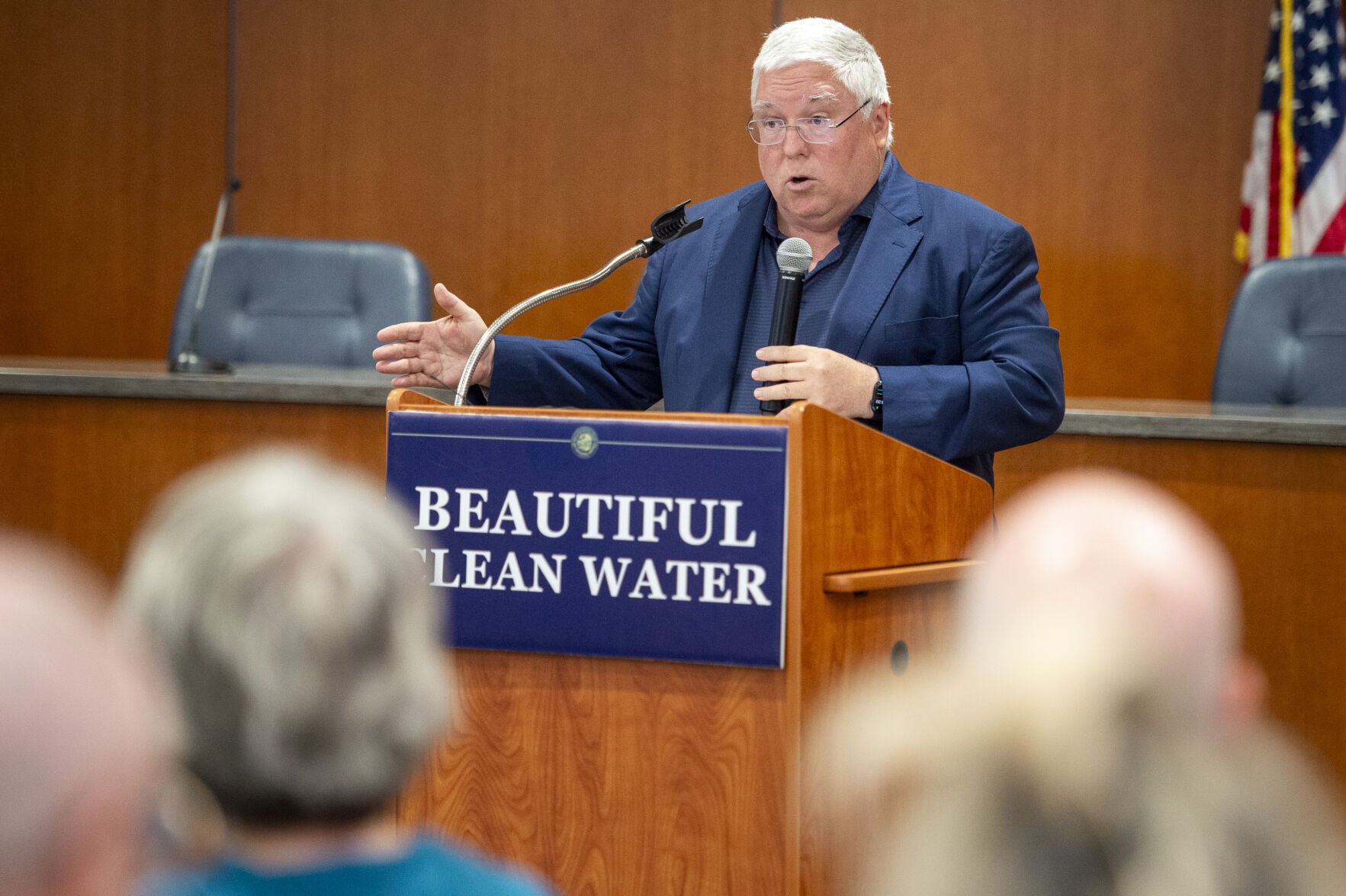
Gov. Patrick Morrisey speaks during what he billed as a "water listening tour" of southern West Virginia at the City Municipal Complex in Princeton, Mercer County, on Aug. 5, 2026.
Gov. Patrick Morrisey speaks during what he billed as a "water listening tour" of southern West Virginia at the City Municipal Complex in Princeton, Mercer County, on Aug. 5, 2026.
LAURA BILSON | Gazette-Mail
PRINCETON — Gov. Patrick Morrisey, facing scrutiny for the state’s handling of the school clothing allowance program, has shifted his focus this week from financial instability to fraud.Ìý
Weeks into questions, the governor announced late Tuesday that about 50% of people using the EBT card containing the clothing voucher funds are withdrawing funds at ATMs.Ìý
“We can’t verify what’s being spent on clothing. Period. That’s a huge problem,â€� Morrisey said Wednesday at a public event in Princeton, Mercer County. He was unaware of the ATM issue until the same day he announced it, he said.Ìý
“We need to be good and fight for our kids, but we have to be fiscally responsible, as well,â€� Morrisey said.Ìý
The day prior, while speaking at Marshall University, Morrisey said, “I want the money for school clothes, not for beer and cigarettes.�
Morrisey shared additional information on social media, about $5.5 million in school clothing program money was withdrawn from ATMs and untraceable.Ìý
“He needs to prove it,� said House Finance Chairman Vernon Criss, R-Wood. “Show me the paperwork, show me the transactions on the ATM."
The West Virginia Department of Human Services has not returned a request from West Virginia Watch for detailed data on spending in the school clothing allowance program.
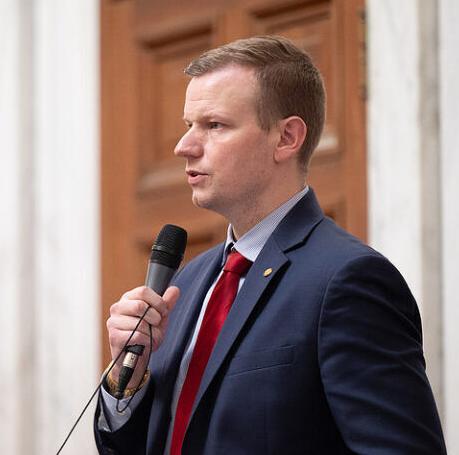
Delegate John Williams, D-Monongalia, is shown on March 5, 2026.Ìý
PERRY BENNETT | W.Va. Legislative Photography
“At this point, it looks like the administration is just throwing spaghetti at the wall to see what they can do to discredit a program that our children count on,� said Delegate John Williams, D-Monongalia. “They do this type of thing so that they can cast doubt in people’s minds over important programs, so that they then can give some tax break to big tech or data centers.�
What happened with W.Va.'s clothing allowance program
The state’s long-standing school clothing allowance program provides eligible families $200 in vouchers to shop for shirts, pants, shoes, coats and more before school starts.Ìý
The program opened later than expected in July, which Morrisey attributed to his ongoing review of federal Temporary Assistance for Needy Families dollars that pay for it.Ìý
Applications for the school clothing assistance program were open for seven days before funds ran out by July 27.Ìý
Regina Smith applied for the state’s school clothing allowance program on the second day it opened, hoping to use the money to pay for pants and shoes for two kids headed back to school.
The money is important, she said.ÌýÂ
“Every day it seems like you’re not hearing something or hearing something completely different,� said Smith, 37, who lives in Clendenin. “It’s definitely nerve-wracking … in summertime right before school, the kids always seem to go through a growth spurt. Someone always needs pants.�
Around 52,000 children applied for the program, according to Morrisey, and final numbers could be around 57,000 — the same level as last year.
Criss said, “We’re not even sure now that he’s going to fund the 52,000.�
“Are you eliminating the program, or are you going to fund the program to the same level as you did last year and take care of 57,000 kids? Because 5,000 didn’t simply just disappear,â€� he said.Ìý
Over the last few weeks, Morrisey’s defense of the program’s operation this year has pointed to his review of federal anti-poverty funds that pay for it. A lengthy statement from his spokesperson on Monday about a looming multi-million-dollar deficit in TANF funds did not mention fraud concerns.
“When this Administration began reviewing West Virginia’s TANF-funded programs, the first data we received described a program in crisis. The state was spending far more each year than the federal grant provides, and the savings that had covered the difference were nearly gone,â€� said Lars Dalseide, the governor’s communications director.Ìý
Williams said the governor shouldn’t have launched a review of the program at the same time it was supposed to launch this summer.
“That should have been something that the administration was aware of and was working on, and that we took up some type of legislation to help during the past legislative session. It just doesn’t make any sense to me,� Williams said.
Morrisey signals program reformÂ
TANF funds for eligible families, including the clothing allowance funds, are loaded onto an EBT card. Families can withdraw funds to shop at places that may not take EBT cards, like thrift stores or garage sales.
“We are going to change it. I’m not going to accept this going forward,� Morrisey said. “I want to have the opportunity to talk to the Legislature. We’re going to look at ways that we can make sure they’re maximizing the money that goes for kids’ clothes.�
All states permit TANF recipients to withdraw cash from an ATM. Rules vary by state, but no one is permitted to withdraw funds from ATMs located in liquor stores or casinos.Ìý
Senate Health Chair Brian Helton, R-Fayette, said he learned Tuesday evening that Morrisey had uncovered the ATM issue with school clothing allowance funds.
“Millions of dollars are walking away out the door, and children aren’t receiving the benefit of this,� Helton said. “Our job is, when we’re using taxpayer dollars to the tune of $11 million, is to make sure that the children this is intended for actually get served.�
It’s too early to provide specifics on changes, according to Helton. He backs the governor’s handling of this.Ìý
“We all need to work together to come up with a solution to how to prevent this in the future. And, I don’t know how it happens,â€� Helton said.Ìý
Projected federal funding gap a concernÂ
West Virginia receives around $100 million annually in TANF dollars to use to help vulnerable families and children. The state commits some of those funds toward its overwhelmed foster care system.
The governor’s office estimates there is a $38 million spending gap between available TANF dollars and $137 million in TANF-funded expenses, leading to less than 13 months left in TANF carryover funds from previous fiscal years.
Their projected gap doesn’t include the state’s share of around $25 million, which would bring the funding gap closer to $12 million.
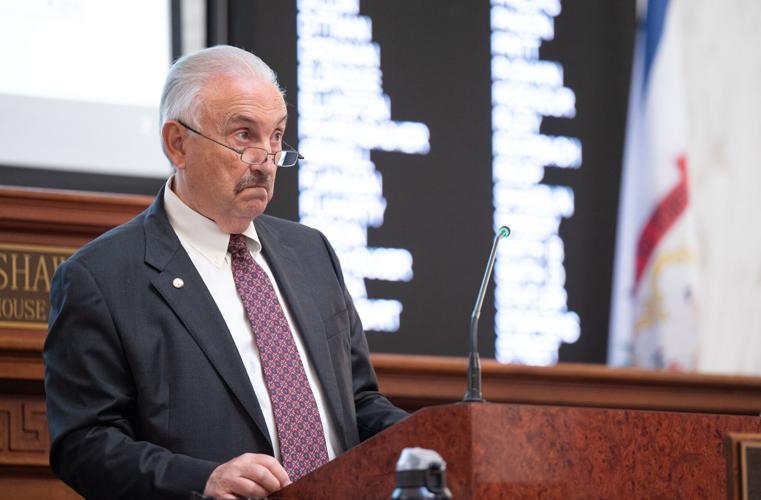
House Finance Chair Vernon Criss, R-Wood, leads a Finance Committee meeting in the House of Delegates chamber on May 18, 2026.
PERRY BENNETT | W.Va. Legislative Photography
Criss equates much of the issues to Morrisey not understanding the budget process, overseen by the Legislature. Lawmakers left the session in March after authorizing $177 million in TANF funding through 2028.
“Because of the lack of understanding … I think it has given him an opportunity to create this artificial crisis,â€� Criss said about Morrisey.Ìý
“There was, for years, a normal process with a normal deadline, and immediately, he shut that off two and a half or three weeks prior to the normal shutdown of taking applications,� he continued. “I think, as a parent and a grandparent, I think that’s terrible.�
Morrisey has directed DoHS “to maintain spending levels for all TANF programs through the end of the current fiscal year, so those programs can continue to provide services to West Virginia families,� according to Dalseide.
The governor plans to seek $15 million supplemental spending from the legislature to keep programs funded at their current level this fiscal year.
CLICK HERE to follow the ÂÒÂ×ÄÚÉä Gazette-Mail and receive