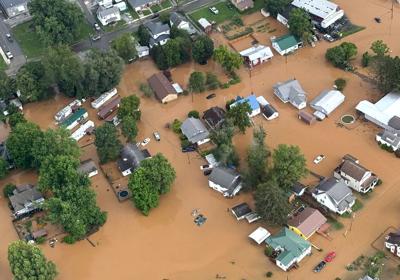
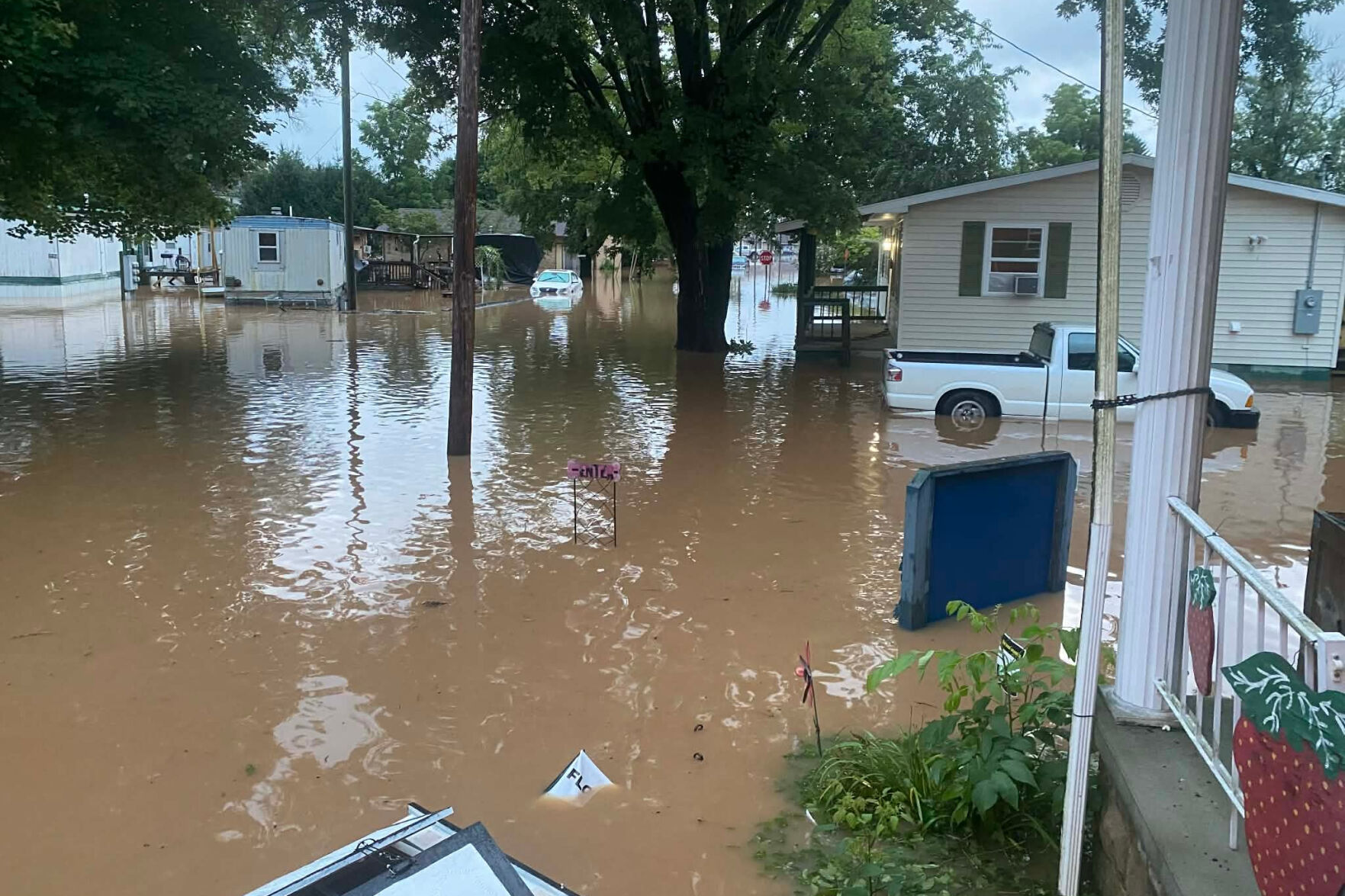
This aerial view shows extensive flooding in Buckhannon, Upshur County, on July 22, 2026.
GOVERNOR'S OFFICE | Courtesy photo
I remember getting a call from my parents around Valentines Day last year, telling me I could not go and pick up my son because the rising water had destroyed the roads leading to their house. It was terrifying and I felt helpless because I could not be with my family and my uncertainty about the situation was growing by the hour.
Last week, parts of West Virginia were once again devastated by floodwaters. The community has rallied to help the victims. Volunteer firefighters are working tirelessly, churches are opening their doors and local nonprofits are assisting families in recovery efforts. It is in moments like these that it becomes clear that West Virginia’s greatest asset is its people.
People are struggling to get back on their feet after the recent flooding, and recovery is important, but it should not be an afterthought. Conversations about flooding often happen after a disaster has already struck. Oftentimes organizations try to help the victims of flooding after it has already occurred.
Flood prevention should be at the forefront of all conversations, not flood recovery. If we can prevent floods before they happen, we are able ensure that West Virginia continues to grow even after disasters.
A lot of this prevention will begin with the natural systems we have already, such as streams and wetlands that can be used to store floodwater and reduce the threat of flooding. By restoring streams, creeks and floodplains, we can reduce flooding across the state. Some of West Virginia's roadway culverts are outdated and continue to overflow even during normal rainfall. Many culverts and drainage systems in West Virginia were built decades ago and were not designed for the heavier rainfall events that we have been seeing in the last few years. Improving culverts and drainage systems can give citizens more time to react while also making it harder for flooding to occur in towns and cities.
Communities that are often devastated by flooding should also evaluate the costs of broader flood prevention strategies, such as flood walls and levees. There is no single solution that will eliminate flooding across the Mountain State, because all areas are different and what works for Pleasants County may not work for Upshur, but a combination of prevention strategies can significantly reduce the damage and help communities be better prepared the next disaster strikes.
Building a more resilient West Virginia
Time and again, West Virginia flooding has taught us that the state's true superpower is the people who live and work in its communities. It’s important to listen to those who are living in these areas because they know where the vulnerable locations are and where roads are going to be washed out first. This information is vital to flood prevention efforts because it provides the people who experience these disasters firsthand with a voice for their community.
Local knowledge should be the starting point for a broader, statewide commitment to flood resilience.
The West Virginia Legislature has recognized flooding as the state's most common and widespread natural disaster, affecting communities across the Mountain State. Because that risk reaches so many towns, roads, homes, and public services, West Virginia needs long-term planning, continued investment, and a stronger focus on preventing damage before it occurs.
According to FEMA, every $1 invested in hazard mitigation saves approximately $6 in future disaster costs, which shows that prevention is not only the responsible choice but also the cost effective one. Disaster prevention should be at the forefront of every conversation after a flood, not pushed aside once the water recedes and the headlines fade, that is how we protect families, strengthen communities, and honor the resilience that West Virginians show every time disaster strikes.
Brady Shrader is a native West Virginian who grew up in the southern coalfields.Â