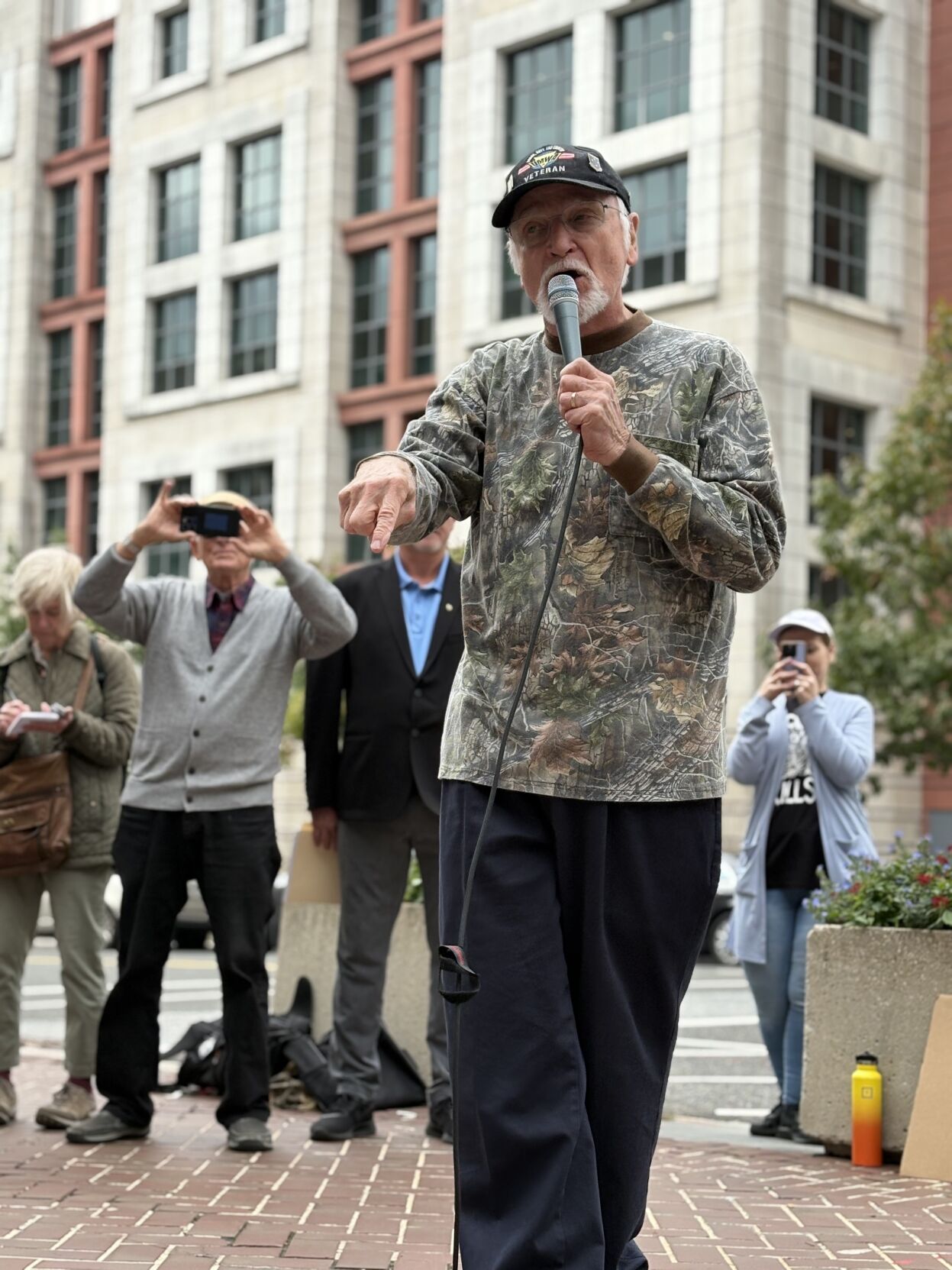
United Mine Workers of America International President Cecil Roberts speaks outside the U.S. Department of Labor's Frances Perkins Building in Washington, D.C., on Oct. 14, 2025. Â
CHELSEA BARNES, Appalachian Voices | Courtesy photo
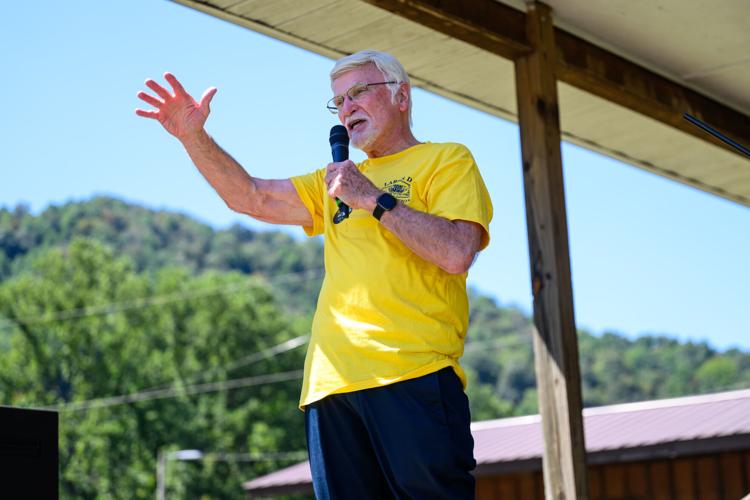
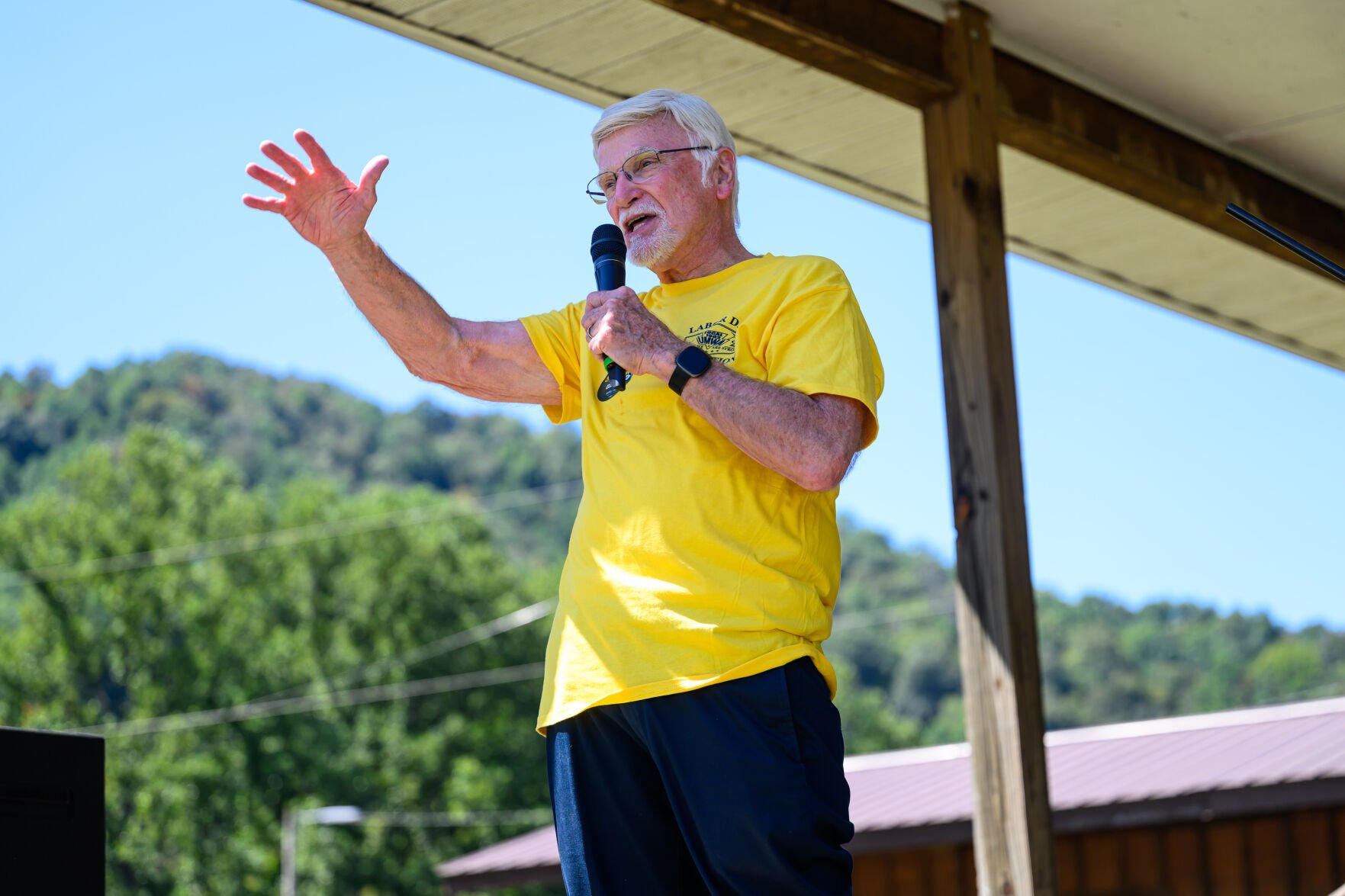
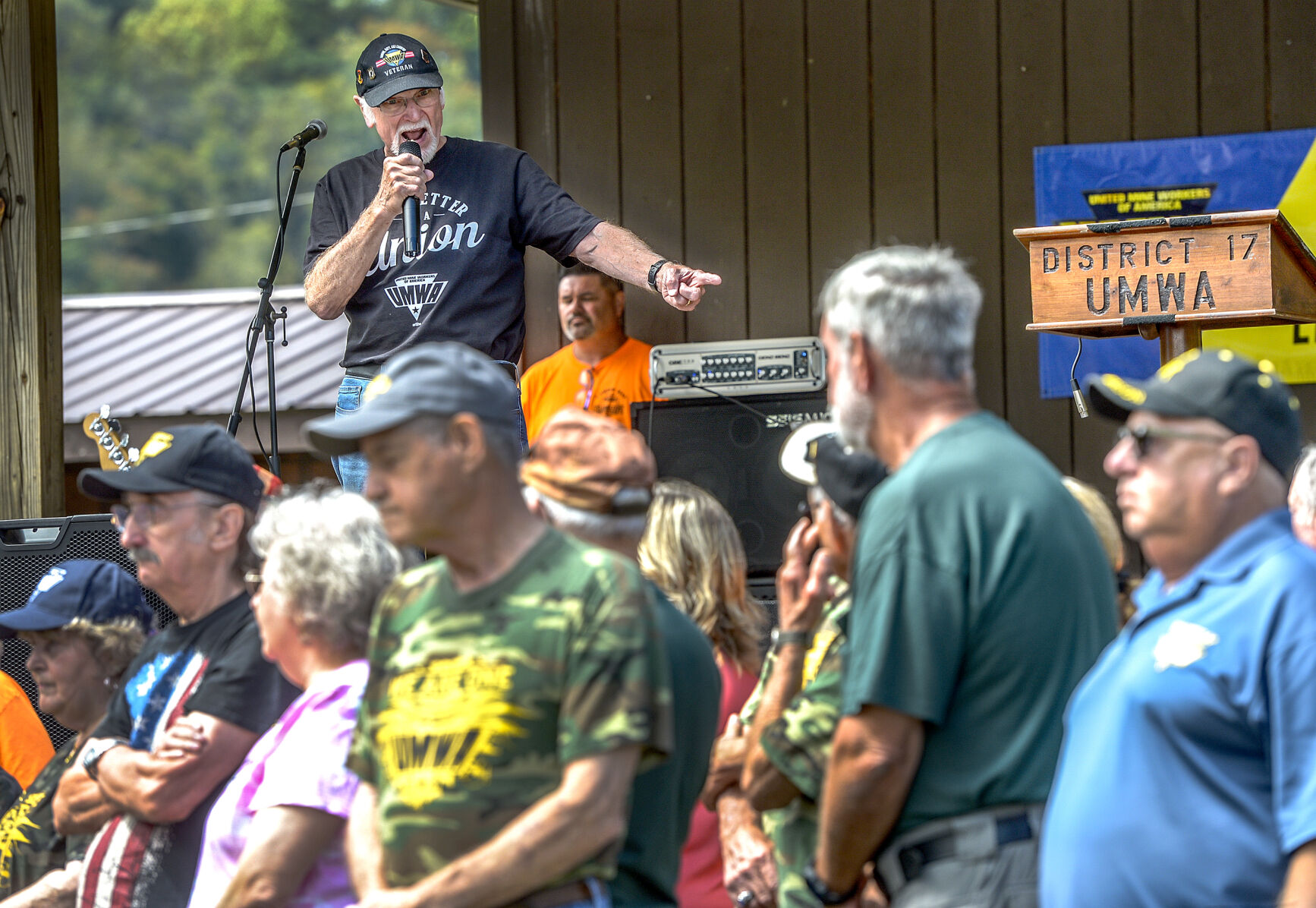
United Mine Workers of America International President Cecil E. Roberts speaks during the UMWA's Labor Day gathering in Racine, Boone County, on Sept. 1, 2025.
United Mine Workers of America International President Cecil Roberts goes in for a hug while greeting people at the UMWA's Labor Day gathering in Racine, Boone County on Sept. 1, 2025.
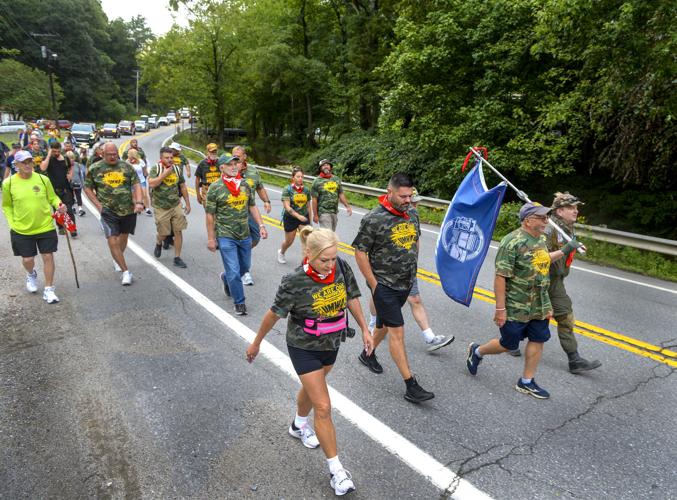
UMWA members along with UMWA International President Cecil Roberts (center) march to Blair Mountain on W.Va. 94 in Marmet on Sept. 3, 2021 on the 100th anniversary of the Battle of Blair Mountain.
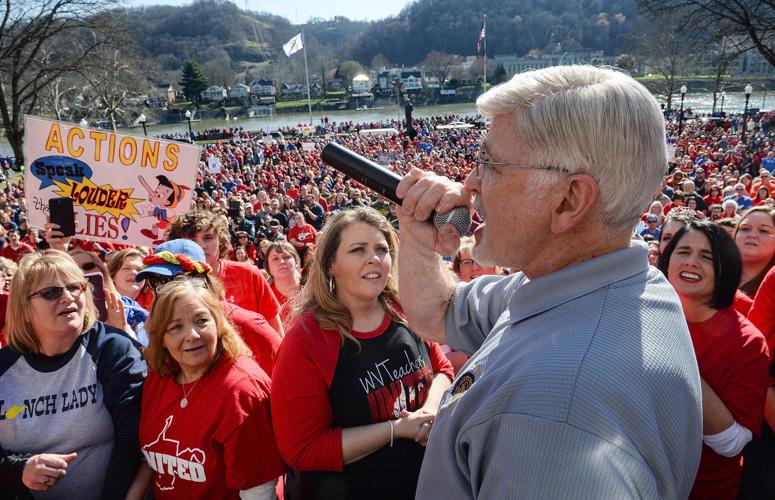
United Mine Workers union President Cecil Roberts speaks to the sea of striking teachers, school service personnel and their supports at a rally outside the state Capitol on Feb. 26, 2018, the third school day of their walkout. The strike was over pay and benefits.
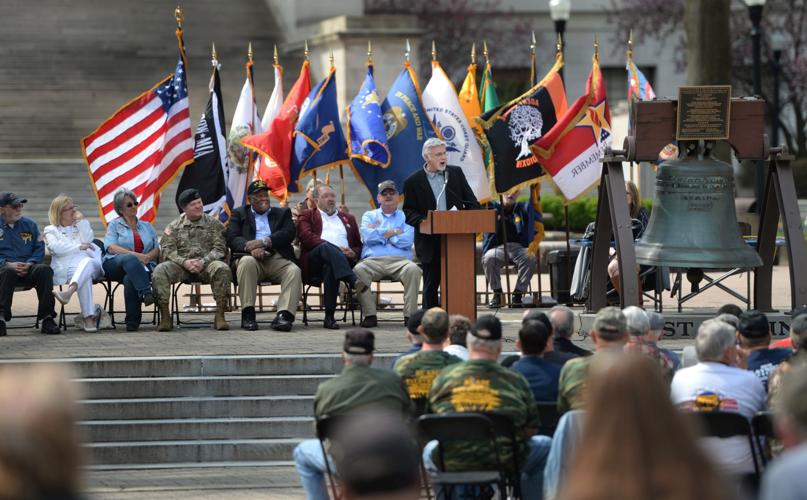
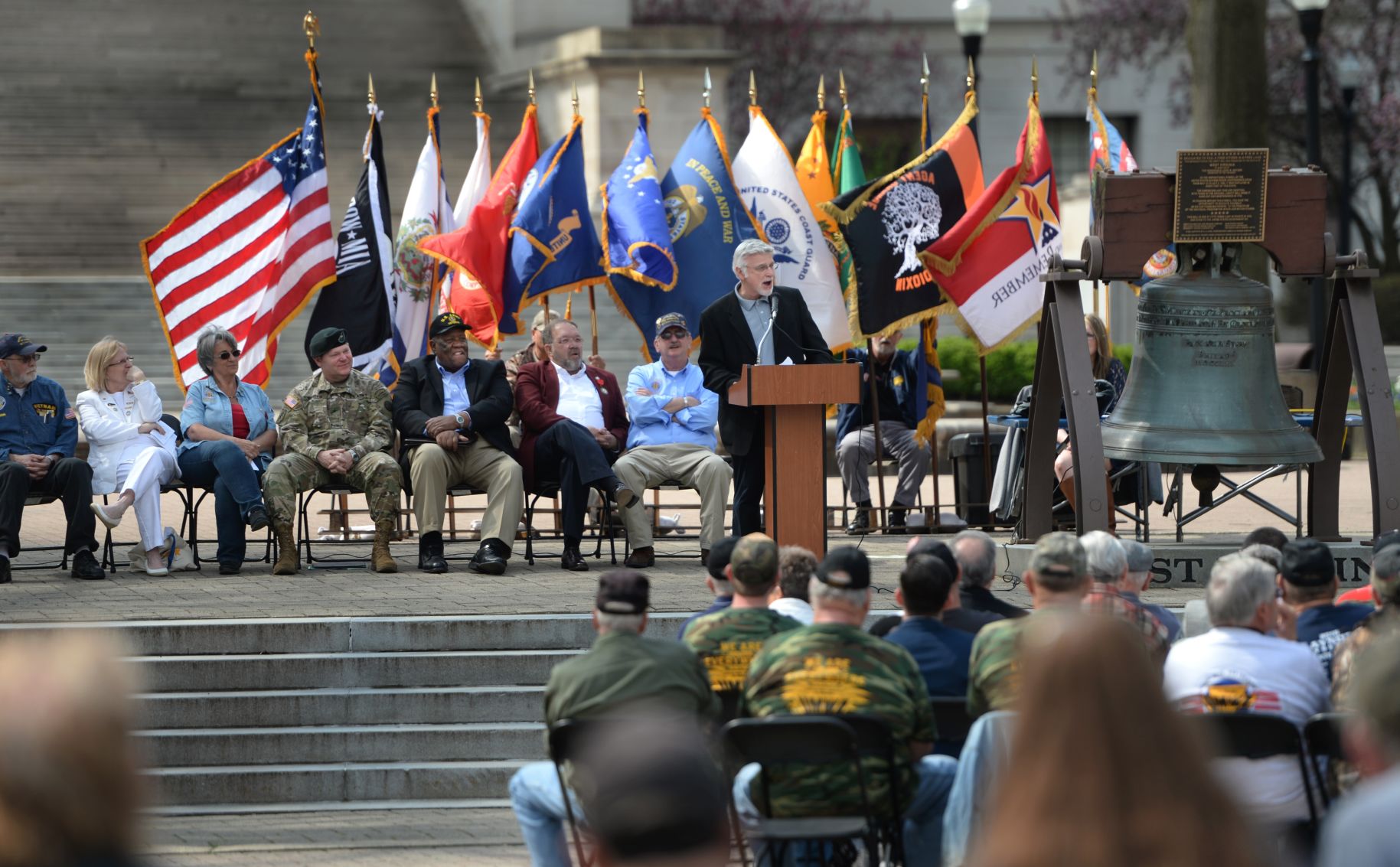
Cecil Roberts, president of the United Mine Workers of America, speaks to veterans and union workers during a rally for Vietnam War veterans at the West Virginia State Capitol in this undated file photo. A veteran of the Vietnam War, Roberts honored the veterans present during his speech.
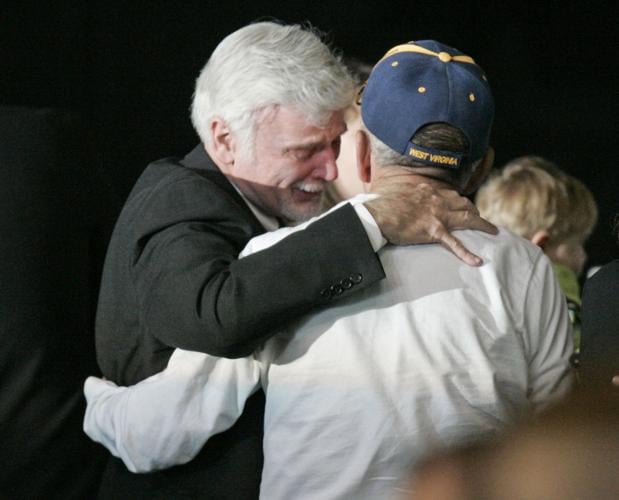
United Mine Workers Association president Cecil Roberts (left) hugs a family member of a miner during a memorial for the victims of the Upper Big Branch mine explosion at the Beckley-Raleigh County Convention Center in Beckley, W.Va., Sunday, April 25, 2010.
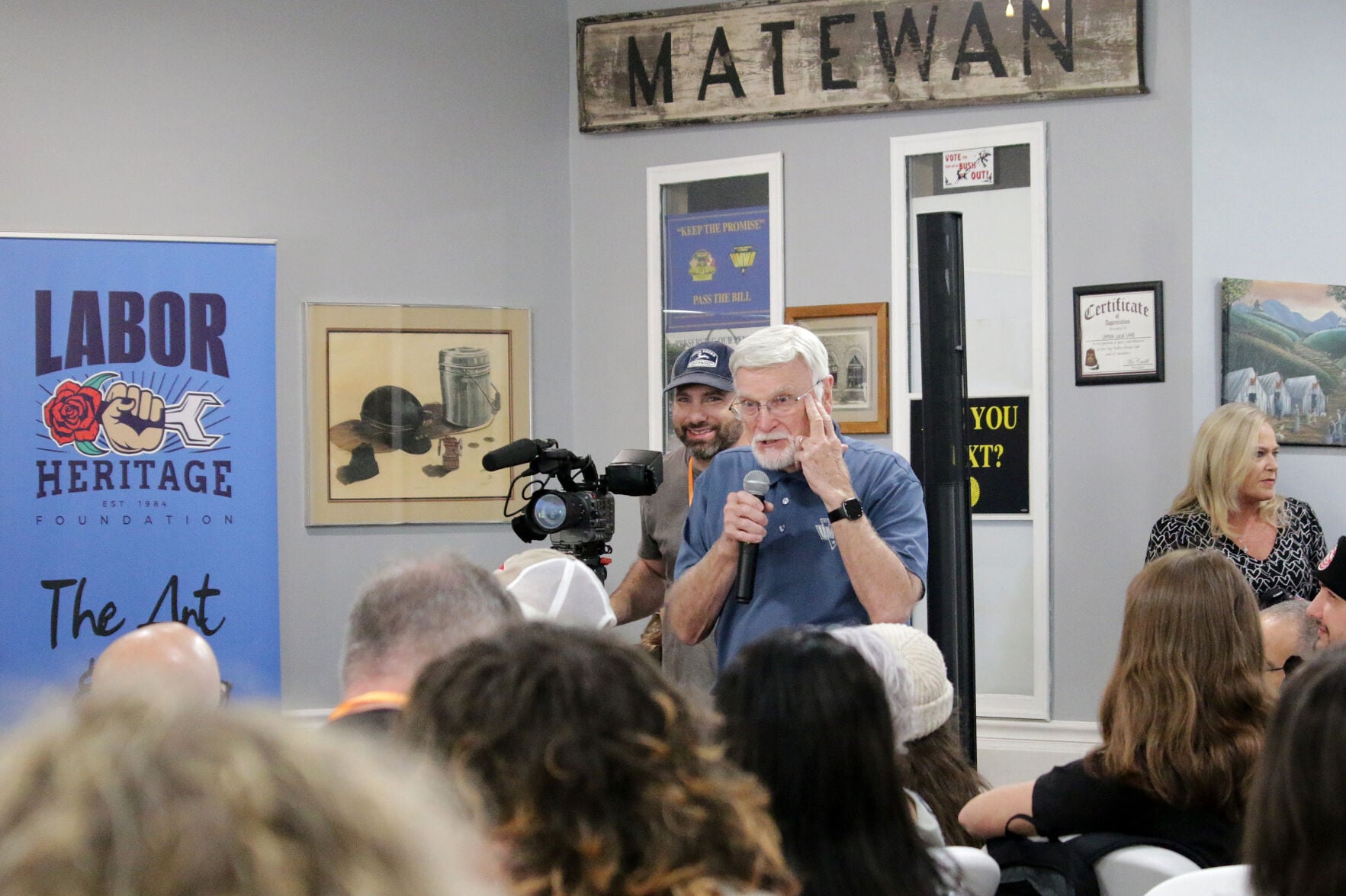
Cecil Roberts, president of the United Mine Workers of America, addresses the Camp Solidarity gathering of pro-union representatives at the West Virginia Mine Wars Museum in Matewan, Mingo County, on Sept. 19, 2025.
United Mine Workers of America International President Cecil E. Roberts speaks during the UMWA's Labor Day gathering in Racine, Boone County, on Sept. 1, 2025.
DYLAN VIDOVICH | HD Media file photo
RACINE — Arnold Seagraves had come to John Slack Memorial Park to see a fellow Cabin Creek native.
“Here to see Cecil,� said Seagraves, 77, a retired mine worker of the Boone County community of Ashford, “for the last time.�
Fourteen years removed from a 47-year career spent mostly as a mining electrician, Seagraves was standing in a field at the Boone County park for the United Mine Workers of America’s 87th annual Labor Day gathering on Sept. 1. He was talking about Cecil Roberts.
“He always represented the people,� Seagraves said.
Moments later, Seagraves recalled his wife Brenda died in June 2024 — and that he learned after experiencing that loss, he has “the best health care in the worldâ€� via UMWA-secured health insurance coverage.Â
“They paid over a half-million dollars on her hospital bills,� Seagraves said. “I never paid a dime.�
For generations, West Virginia coal miners have powered the state and the country.
United Mine Workers of America International President Cecil Roberts goes in for a hug while greeting people at the UMWA's Labor Day gathering in Racine, Boone County on Sept. 1, 2025.
DYLAN VIDOVICH | HD Media file photo
And for generations, Cecil Roberts powered West Virginia coal miners.
As the second-longest-tenured president in UMWA history, Roberts was the face and voice behind the UMWA’s fight for benefits like those that Seagraves and tens of thousands of miners have relied on for decades.
In 2025, Roberts impassionedly defended vulnerable Mountain State mine workers and their families at a precarious time for them under labor protections weakened by the Trump administration and Congress. For that reason, Roberts is the Gazette-Mail’s 2025 West Virginian of the Year.
“I think one would be hard-pressed to argue with the notion that President Roberts will go down as one of history's great labor leaders,� said Chris Williamson, who led the United States Mine Safety and Health Administration as its assistant secretary of labor from 2022 to 2025 under then-President Joe Biden.
Cecil Roberts, president of the United Mine Workers of America, speaks to veterans and union workers during a rally for Vietnam War veterans at the West Virginia State Capitol in this undated file photo. A veteran of the Vietnam War, Roberts honored the veterans present during his speech.
Gazette-Mail file photo
Roberts, 79, had an especially high-profile 2025, his 30th year as the head of the UMWA after joining the union in 1971 after an Army combat service stint in Vietnam.
He spoke on behalf of miners and veterans at rallies throughout West Virginia and Washington, D.C. in response to federal miner and veteran health and safety resource cuts enacted by the Trump administration and Republican-led Congress.
Under Roberts’ leadership, the UMWA established a fund, the Cecil E. Roberts Legacy Fund, to detail and promote labor history — including Roberts’ place in it — that in September contributed a $50,000 gift to support the decade-old West Virginia Mine Wars Museum in Matewan, a historic Mingo County mine wars site.
The UMWA announced a project called the Cecil E. Roberts Legacy Museum will open at UMWA District 17 headquarters in ÂÒÂ×ÄÚÉä in June 2026 and will feature personal artifacts, historic photographs and awards from Roberts’ career.
United Mine Workers of America International President Cecil Roberts speaks outside the U.S. Department of Labor's Frances Perkins Building in Washington, D.C., on Oct. 14, 2025. Â
CHELSEA BARNES, Appalachian Voices | Courtesy photo
Then, in October, Roberts officially stepped down as UMWA International president, handing off leadership at the UMWA International Special Convention in St. Louis to a successor and St. Albans native he heartily endorsed after first hiring him aboard, former Secretary-Treasurer Brian Sanson, seven months after the UMWA announced in March he would do so.Â
“I think one of the primary things is he never forgot where he came from,� Sanson said in a phone interview last month after taking over as president. “He's a coal miner from Cabin Creek [who] went to Vietnam and protected our freedom and democracy and came back here to the United States and started protecting coal miners.�
“I’ve done nothing by myself,� Roberts said in a phone interview. “It’s taken everybody’s efforts. If there’s anything that I’ve done, it’s maybe help organize people into a powerful enough organization to secure pensions, secure health care, win strikes against people who are out just to break the union.�
UMWA members along with UMWA International President Cecil Roberts (center) march to Blair Mountain on W.Va. 94 in Marmet on Sept. 3, 2021 on the 100th anniversary of the Battle of Blair Mountain.
Gazette-Mail file photo
Labor organizing is in Roberts’ blood.
Roberts is the great-nephew of Bill Blizzard, a key organizer in the mine wars who led a movement of some 10,000 coal miners and their allies in the 1921 Battle of Blair Mountain, the largest labor uprising in U.S. history. The miners were trying to unionize against 3,000 state police troopers, private security forces and other strikebreakers in Logan County.
The miners were desperate to end poor living and working conditions in a police state that controlled their lives through private detectives who harassed them, currency that they could spend only at company-owned stores and deplorable working conditions.
Roberts is also the great-grandson of Sarah Blizzard, another pivotal labor activist during the mine wars and mother of Bill Blizzard.
“When that's in your blood,� Sanson said, “then you're bound to go in that direction.�
Roberts recalled that his father was on a mine strike over health care when he was born in 1946. Roberts grew up in the Cabin Creek area coal company town of Kayford. He remembers having “not much of a yard� and no indoor plumbing, with a toilet in the yard outside a house that looked like most others there and dirt roads off a main blacktop thoroughfare.
Company store purchases and company doctor visits came out of miners’ paychecks, Roberts recounted.
“There was no fair pay, and miners were subjected to surveillance by mine guards,� West Virginia Mine Wars Museum Executive Director Kenzie New Walker told the Gazette-Mail of the mine war work conditions that led up to Roberts’ formative memories of company town life. “There was no justice. There was no union. Union coal miners and their families had to fight for decades and decades to make the job what it is today.�
Although he’s been a fiery public speaker for decades, Roberts says he used to hate to “get up in front of people.�
United Mine Workers union President Cecil Roberts speaks to the sea of striking teachers, school service personnel and their supports at a rally outside the state Capitol on Feb. 26, 2018, the third school day of their walkout. The strike was over pay and benefits.
Gazette-Mail file photo
“I used to hide behind whoever was in front of me to keep from answering a question,� Roberts said, recalling his schooldays. “I was, at that time, the most introverted person you would ever lay eyes on.�
But Roberts said leadership schools to which the Army sent him during his two years there and union responsibilities at UMWA Local 2236 in Winifrede, Kanawha County, after his return from the military grew his confidence, yielding positive feedback on his oratory acumen in the years leading up to his election as UMWA vice president in 1982.
Sanson remembers first hearing Roberts speak at a UMWA Labor Day gathering in Racine in 1996 or 1997.
“Anybody [who] has heard President Roberts speak [knows] it's an experience,� Sanson said. “He’s like a Baptist preacher preaching the sermon of the union. It really sent chills up my spine at the time.�
At the United Mine Workers of America’s 86th annual Labor Day celebration on Sept. 2, 2024, in Racine, UMWA International President Cecil Roberts gives a fiery speech to miners and their families.
United Mine Workers union President Cecil Roberts speaks to the sea of striking teachers, school service personnel and their supports at a rally outside the state Capitol on Feb. 26, 2018, the third school day of their walkout. The strike was over pay and benefits.
United Mine Workers of America International President Cecil E. Roberts speaks during the UMWA's Labor Day gathering in Racine, Boone County, on Sept. 1, 2025.
United Mine Workers of America International President Cecil Roberts goes in for a hug while greeting people at the UMWA's Labor Day gathering in Racine, Boone County on Sept. 1, 2025.
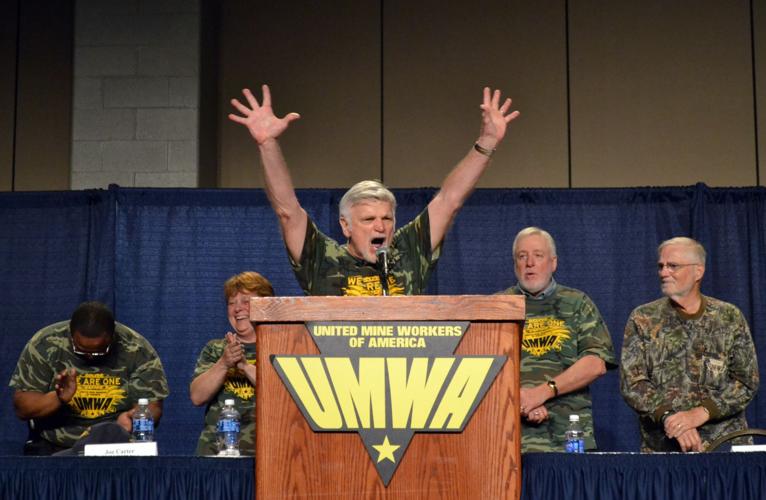
Cecil Roberts, International President for the United Mine Workers of America, speaks during the funeral service for former West Virginia Supreme Court Justice and Attorney General Darrell McGraw inside the Culture Center at the West Virginia Capitol Complex in ÂÒÂ×ÄÚÉä Tuesday, Dec. 17, 2024.
UMWA members along with UMWA International President Cecil Roberts (center) march to Blair Mountain on W.Va. 94 in Marmet on Sept. 3, 2021 on the 100th anniversary of the Battle of Blair Mountain.
United Mine Workers of America president Cecil Roberts speaks to about 4,000 retired members at the Lexington Center in Lexington, Ky., on Tuesday. Roberts urged members to push for legislation that would protect pensions and health care benefits for retirees that have been put in jeopardy due to a downturn in the coal industry.
United Mine Workers Association president Cecil Roberts (left) hugs a family member of a miner during a memorial for the victims of the Upper Big Branch mine explosion at the Beckley-Raleigh County Convention Center in Beckley, W.Va., Sunday, April 25, 2010.
Those who have worked with Roberts say he exudes a sincerity that has helped him draw allies among miners, legislators and other key decision-makers.
“Cecil was just always Cecil,� former West Virginia governor and U.S. Sen. Joe Manchin, I-W.Va., said in a phone interview. “He was just down to earth and wanted to help anybody and everybody, and had sympathy and empathy for every human being that I've ever encountered with him.�
Joe Main, who led the MSHA as the agency’s assistant secretary of labor from 2009 to 2017 under then-President Barack Obama after serving with Roberts within the UMWA as its occupational safety and health administrator, called Roberts “one of my heroes.�
“[H]e's a very genuine person,� Main said in a phone interview, “and it doesn't take you long to figure out where his heart's at.�
Trump administration has 'crippled' miner protectionÂ
After reflecting on Roberts’ commitment to the union cause at the UMWA Labor Day gathering, Seagraves’ attention turned from an ally to what he concluded are less friendly forces in Washington.
“[President Donald] Trump and the Republicans are trying to tear down everything the unions built over the last 80 years,â€� Seagraves said.Â
Miner safety protections, already weaker in critical areas than Roberts and other miner advocates have urged for decades, have been eroding under the Trump administration.
Roberts and other miner allies have slammed the Trump administration’s oversight of a landmark rule finalized in 2024 designed to reduce the permissible limit of exposure to toxic silica dust driving up black lung incidence among increasingly younger central Appalachian miners.
Trump’s MSHA has agreed to delay enforcement of that rule and has been discussing a potential settlement with industry groups after a federal court put the rule on hold in April in response to a challenge from those groups.
On another front, under Roberts’ leadership, the UMWA was one of nearly a dozen unions that filed a federal lawsuit in July alleging the Trump administration has persisted in unlawfully eliminating National Institute of Occupational Safety and Health divisions that carry out statutorily required functions that safeguard workers’ health. The UMWA also has fought the silica rule’s delay in federal court.
Miner advocates say Trump administration “reduction in force� notices and contract terminations have halted vital NIOSH mining safety research amid a mass downsizing at the Department of Health and Human Services, the NIOSH’s parent agency.
Meanwhile, the MSHA workforce has been diminished under Trump.
Carey Clarkson, national vice president with the National Council of Field Labor Locals union that represents MSHA employees, told the Gazette-Mail in March a Trump administration-ordered hiring freeze cut off the hiring process for 90 people who had been offered MSHA positions. Roughly 120 more employees were lost after they took a voluntary resignation offer amid the Trump administration’s mass downsizing of the federal workforce.
Clarkson said MSHA barely had enough staff before Trump retook office to perform required inspections, let alone “spend quality time� on mines that need greater enforcement.
In July, MSHA proposed eliminating the authority of the agency’s district managers to require additional provisions in ventilation control and roof control plans beyond requirements in federal code. Mine operators no longer would have to revise roof control or ventilation plans at the request of a MSHA district manager.
“This administration has just basically crippled all the legs that protect miners,� Main said.
“We’re not wanting to fight with the president. We just think people ought to be able to go to work and be protected, not be sick and not die,� Roberts said.
Cecil Roberts, president of the United Mine Workers of America, addresses the Camp Solidarity gathering of pro-union representatives at the West Virginia Mine Wars Museum in Matewan, Mingo County, on Sept. 19, 2025.
NANCY PEYTON-BROWN | HD Media file photo
In what he concluded has been a federal deck stacked against mine workers, Roberts spoke out against it at Camp Solidarity, a three-day, pro-labor conference hosted in September by the West Virginia Mine Wars Museum at which 100 people gathered from throughout the country to contemplate and plan the future of the labor movement.
“The most powerful group wins, right? I’d just about take that as opposed to the Supreme Court and the White House and the [National Labor Relations Board] being against us,� Roberts told a receptive conference crowd. “I’d just about take that. We’ll get out here and slug it out with you. See how much of it you can take.�
United Mine Workers President Cecil Roberts is arrested at a labor protest in ÂÒÂ×ÄÚÉä in this undated file photo.
Gazette-Mail file photo
Union membership has dwindled over the course of Roberts’ three decades at the UMWA’s helm — and long before it.
The U.S. share of unionized workers in 2024 was 9.9% — according to National Bureau of Economic Research-published data. Union density climbed steadily from 12.8% in 1935 to a peak of 34.2% in 1945 after the 1935 passage of the National Labor Relations Act, the main labor relations law for private-sector employees.
But union density has fallen off sharply since its 1980 clip of 22.2%, a decline labor advocates have attributed to Congress failing to raise the minimum wage consistent with inflation starting in the late 1960s, and a narrowing of workers’ rights throughout the Reagan administration, epitomized by its 1981 firing of more than 11,000 striking air traffic controllers who refused to return to work.
West Virginia’s 10% share of workers who are represented by unions in 2024 was the 24th-highest out of 50 states and lower than all bordering states but Virginia. West Virginia's 36.5% union density was 12th-highest nationally in 1964, meaning the Mountain State has become significantly less unionized, even compared with other states.
United Mine Workers Association president Cecil Roberts (left) hugs a family member of a miner during a memorial for the victims of the Upper Big Branch mine explosion at the Beckley-Raleigh County Convention Center in Beckley, W.Va., Sunday, April 25, 2010.
The Associated Press
Labor allies say the decline of unions has been a key culprit behind the nation’s long-term wage stagnation.
Ninety percent of children born in the 1940s earned more than their parents did at age 30, while only half of children born in the mid-1980s did the same, according to a 2023 analysis published by the Biden-era Department of the Treasury that held that unions could raise middle-class wages, improve work environments and promote demographic equality.
Walker, the West Virginia Mine Wars executive director, was born the daughter of a coal miner who had to get retrained and got support in paying for that schooling from the UMWA on his path to becoming a registered nurse.
“We don’t just need jobs in West Virginia, we need union jobs — those that come with the safety nets that the UMWA has provided, including Cadillac-grade health insurance and pensions,� Walker said.
Roberts panned West Virginia’s 2016 antiunion right-to-work law allowing workers to opt out of a union and not pay union dues while still being covered by wage and benefit provisions of their union contract.
“Unions are still fighting every single day to help workers, to lift workers up and make sure they have health care,� Roberts said. “What you need is, if you want the middle class to expand, loosen the strings with respect to the right to organize, and that will happen.�
'You can fight and you can win'
Roberts was instrumental in the successful push for 2019 legislation inserted into a spending bill estimated to secure the pensions of 92,000 miners and protect health care benefits for 13,000 miners, in part by stabilizing a pension plan that was headed for insolvency following coal company bankruptcies.
The legislation passed after then-Senate Majority Leader Mitch McConnell, R-Ky., ended his blockage of the legislation.
“To get that through and to protect those benefits, and to do it in a bipartisan fashion, really speaks to his leadership, but also just his commitment to the members of the union,� Williamson said.
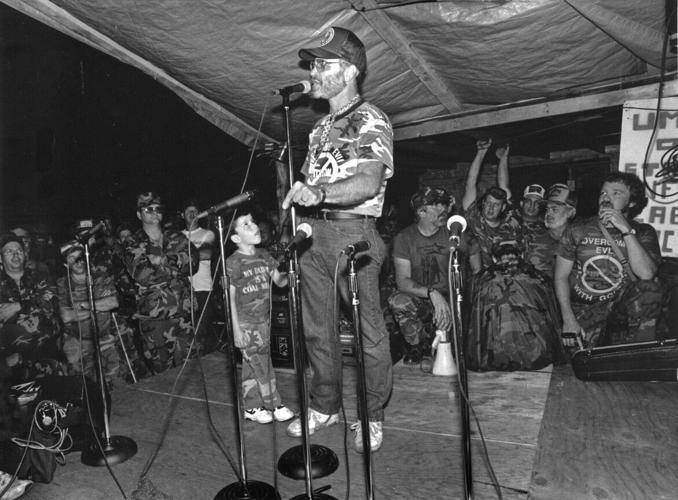
Then-United Mine Workers of America International Vice President Cecil Roberts speaks during a Pittston strike nighttime rally in 1989. Â
EARL DOTTER | Courtesy photo
Three decades earlier, as UMWA International vice president under then-President Richard Trumka, Roberts was a leading figure in the UMWA’s 10-month strike against the Pittston Coal Company in southwestern Virginia as an onsite negotiator.
Some 2,000 miners from West Virginia and neighboring states went on strike, during which UMWA members took over the Moss 3 coal preparation plant, one of the world’s largest such plants, resulting in the shutdown of the company’s coal production in Virginia for nearly a week.
The strike gave rise to Camp Solidarity, a few miles from the Moss 3 preparation plant, initially a place to house and feed UMWA and other union supporters aiding the strikers that became a morale-boosting hub for strikers, community members and other allies.
Farm labor leader Cesar Chavez and civil rights activist Jesse Jackson Sr. were among the supporters who gathered to back the miners, who secured a new contract in February 1990 that ended the strike.
“It was one of the boldest acts of civil disobedience in modern labor history, and [Roberts] was at the center of it,� Walker said.
Roberts remembers the nation’s labor movement at the time of the Pittston strike as still shaken by the Reagan administration’s firing of air traffic controllers eight years earlier.
“I think the labor movement came out of that stronger because almost everybody in the labor movement had something to do with that strike,� Roberts said.
“It was really kind of a call to arms to all labor,� Sanson said, “to say that you can fight and you can win.�
That has been Roberts’ core message all along — one that he’ll still be fighting for even as he settles into retired life from his home base of Stafford, Virginia.
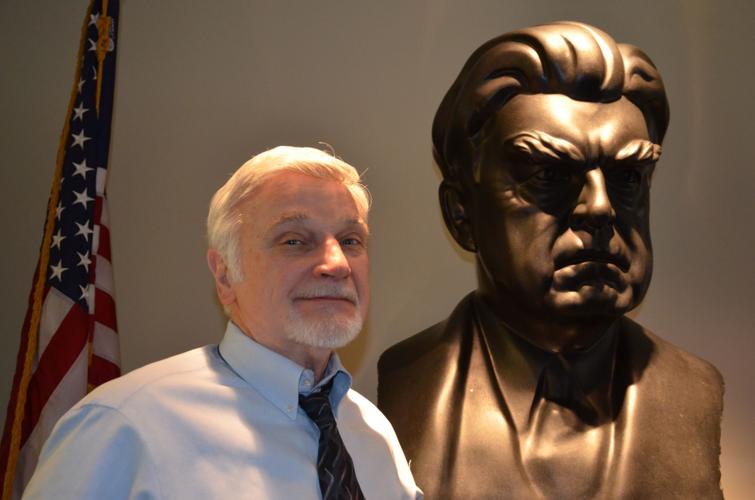
United Mine Workers President Cecil Roberts stands next to a bust of longtime union President John L. Lewis on May 1, 2017.
Gazette-Mail file photo
“He is definitely going to be the union's main spokesperson with respect to veteran issues across this country,� Sanson said of Roberts, who believes he contracted cancer — from which he is now in remission — as a result of exposure to Agent Orange in Vietnam.
Speaking before Seagraves and the crowd of 150-plus at John Slack Memorial Park this past Labor Day some 20 miles from where he grew up, Roberts was as spirited as ever, bellowing fighting words into his microphone that set off the day’s loudest waves of applause in return. He pledged to do whatever Sanson asked under the latter’s new presidency.
“I’m retiring,� Roberts told the crowd. “I’m not dying.�
“One thing the union, this history, and especially President Roberts teach us is that we have far more in common than we do apart, and that thread is class,� Walker said. “Even in retirement, I can’t imagine him stepping away from the work of bringing people together and fighting for working families. It’s who he is. It’s quite literally in his bloodstream. And it matters more than ever.�
CLICK HERE to follow the ÂÒÂ×ÄÚÉä Gazette-Mail and receive