Variable clouds with thunderstorms - possibly severe, especially this evening. Storms could contain damaging winds. Low 72F. Winds light and variable. Chance of rain 100%. Rainfall possibly over one inch..
Tonight
Variable clouds with thunderstorms - possibly severe, especially this evening. Storms could contain damaging winds. Low 72F. Winds light and variable. Chance of rain 100%. Rainfall possibly over one inch.
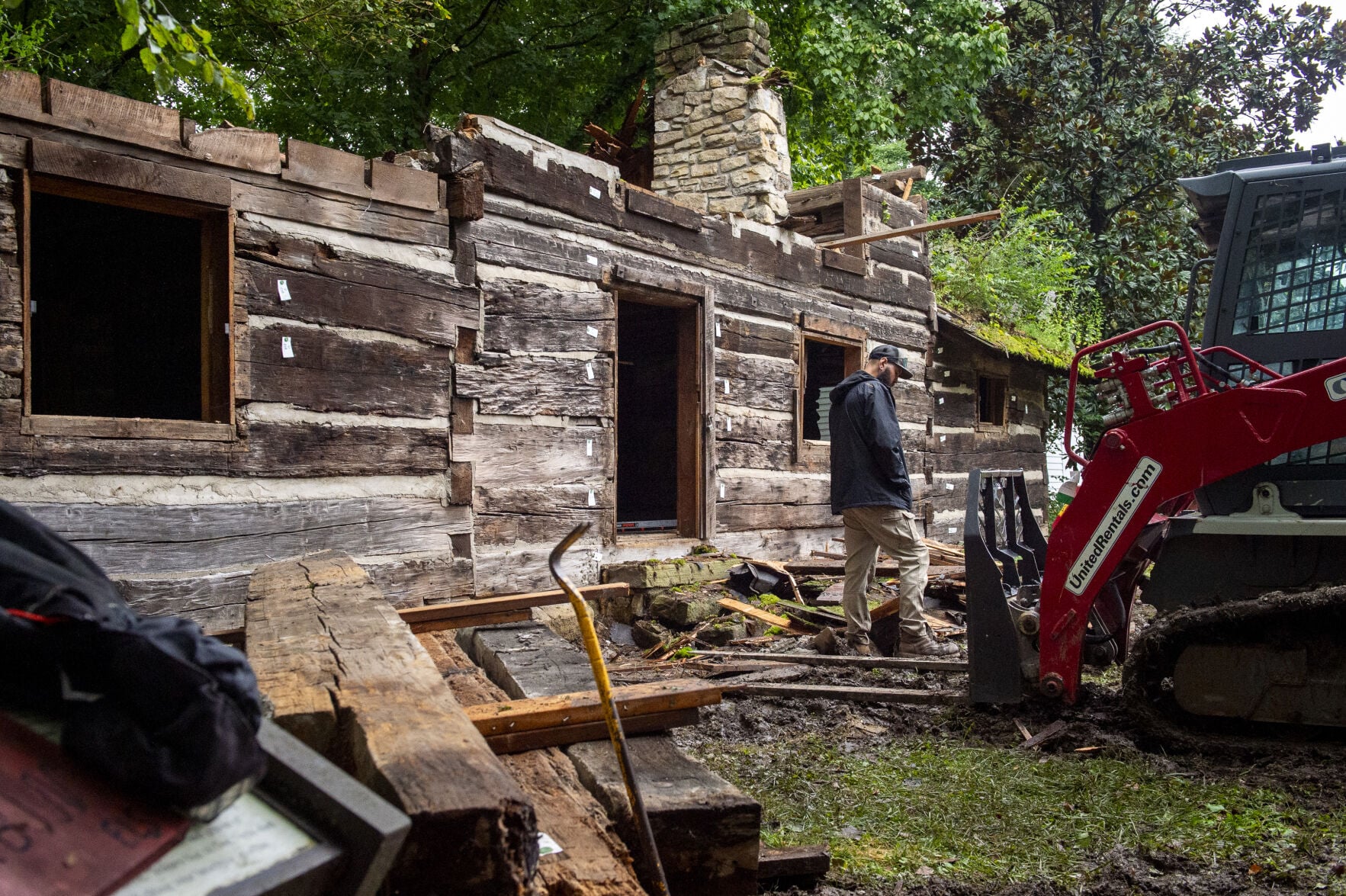
Evan Canterbury, of Lewisburg, walks through debris from most of the roof being removed from the Ruffner Cabin in ÂÒÂ×ÄÚÉä, Tuesday, Aug. 11, 2026.
LAURA BILSON | Gazette-Mail
For Mark Bowe, of "Barnwood Builders" fame, taking on the task of disassembling, moving and rebuilding the Ruffner Cabin, ÂÒÂ×ÄÚÉä's oldest home — built circa 1795 — is fulfilling a childhood dream.
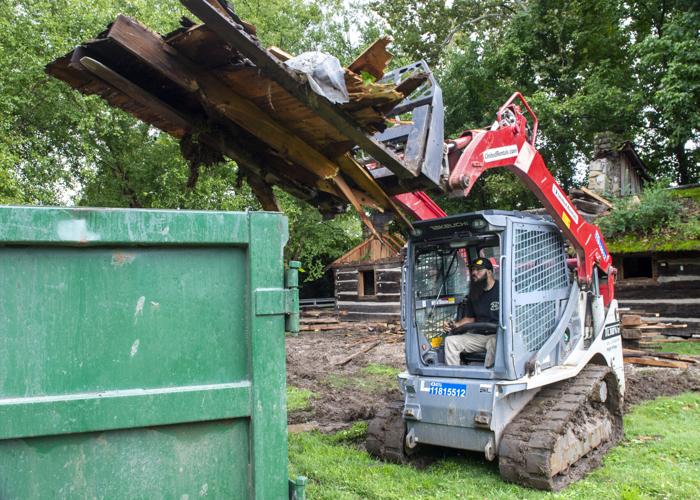
"It's a very personal project for me, and it's a part of our state's history," Bowe said on Tuesday, as he watched long-time associate Johnny Jett artfully work the controls of a high-reach forklift to peel away sections of the Cabin's non-original, vegetation-sprouting roof and drop them in a dumpster.
"Growing up, I passed by this cabin every time my family drove to ÂÒÂ×ÄÚÉä for Sunday dinner at Ponderosa," said Bowe, who was raised in the Upper Kanawha Valley town of Glasgow. "As a boy, fixing up this cabin someday was a goal of mine. Now, 500 cabins later, here I am."
Bowe, who earned degrees in business and safety management at West Virginia University, worked as a coal miner before forming his own business, Antique Cabins and Barns, in 1996, through which he rescued and repurposed pioneer-era buildings across West Virginia and surrounding states.
Bowe said he got the idea for the new business while helping a fellow miner tear down an old building on his property in Boone County and discovering that it contained a wealth of wormy chestnut wood, eminently suitable for re-use in building distinctive new structures.
In 2013, he became the host and central figure in the television reality series "Barnwood Builders," which aired for 17 seasons over 11 years, drawing more than 1 million viewers per episode in its heyday.
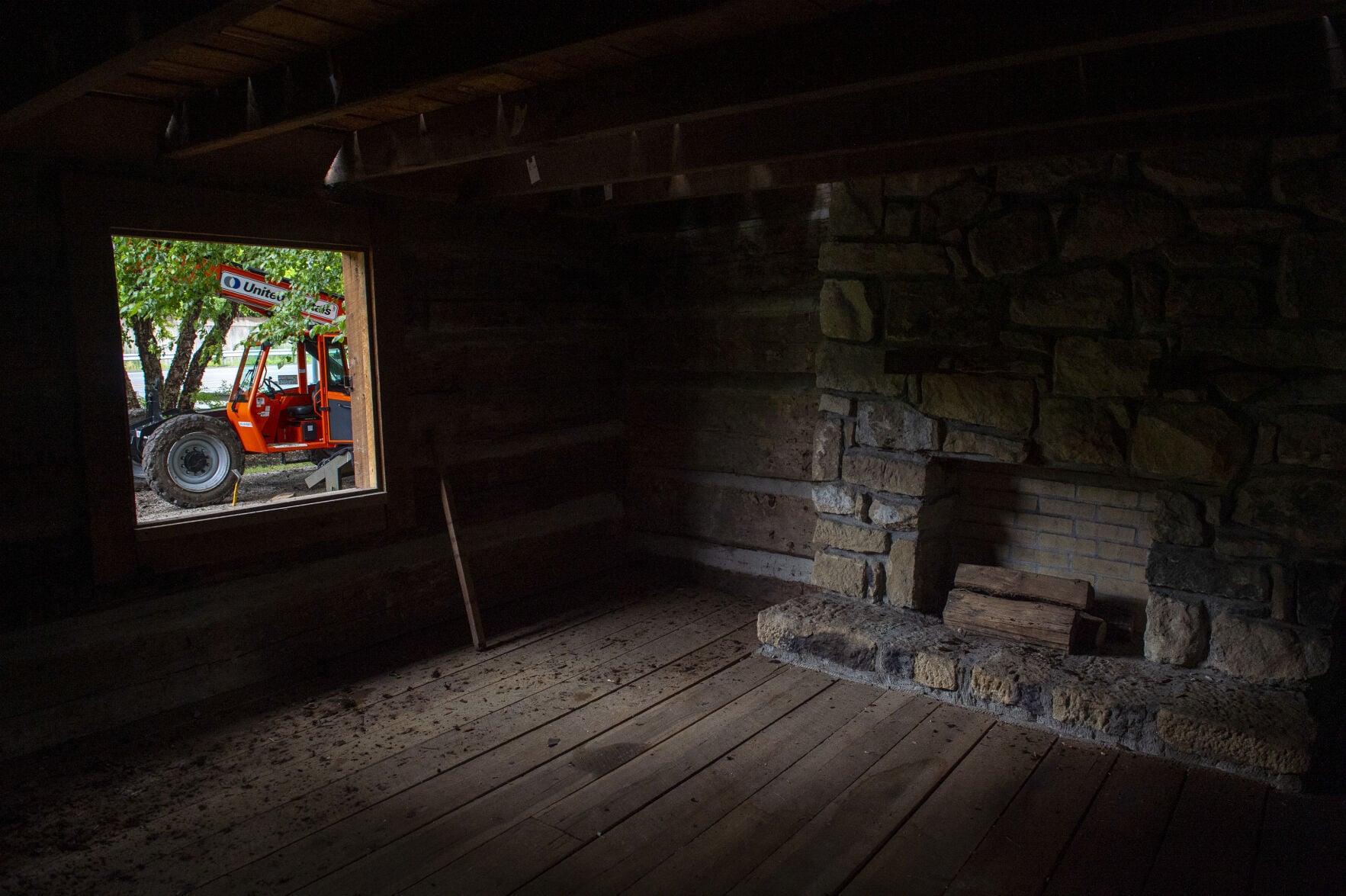
Construction equipment can be seen outside while a fireplace can be seen inside the Ruffner Cabin in ÂÒÂ×ÄÚÉä, Tuesday, Aug. 11, 2026.
LAURA BILSON | Gazette-Mail
On Monday, Bowe and his crew, which, in addition to Jett, included 28-year colleague and chainsaw virtuoso Sherman Thompson, and Bowe's cousin, Richard Basford of Winfield, numbered, tagged and charted each historically correct log, joist and support beam that remains suitable for reassembly.
That information will be entered into a CAD (computer-aided design) program to produce blueprints for use in re-assembling the structure.
"It's a large cabin — 51 feet long and 17 feet wide, with two stories, built at the same time," Bowe said.
When rebuilt, Bowe said the log house will be even more authentic to its era than it is now.Â
"Right now, it's what I call a 70-percenter, meaning we'll have to replace about 30% of its components," he said. A pre-Civil War structure in Roane County now being disassembled by his team will likely supply some of the replacement logs, while others could come from Bowe's log structure "boneyard" in Greenbrier County.
Even mistakes made by the log home's original builders will be incorporated in the rebuilt structure.Â
"It's 4 inches out of square now,"Â Bowe said, "and it will 4 inches out of square when it's reassembled in Malden."
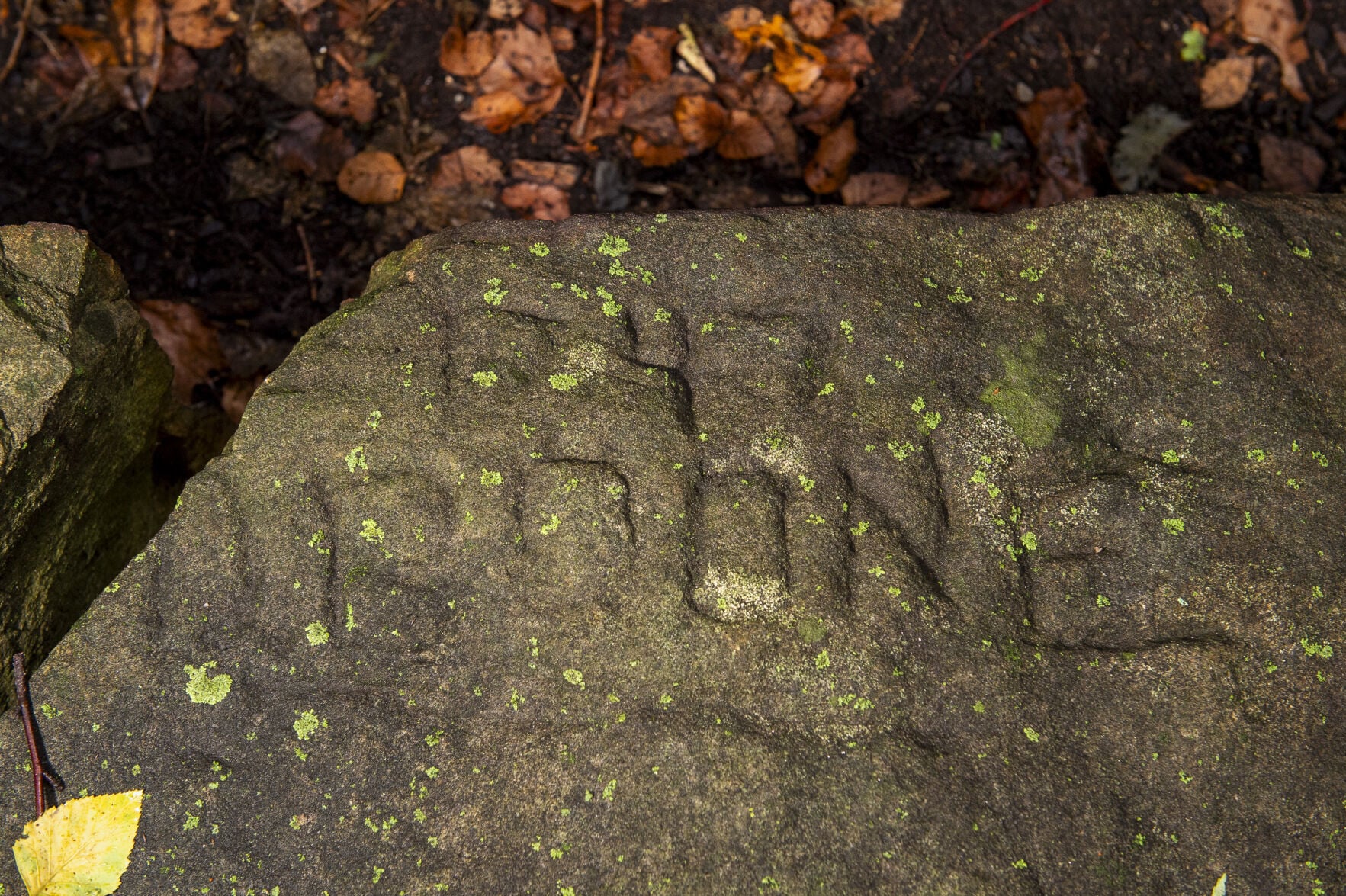
An engraving that is rumored to have been carved by Daniel Boone sits outside the Ruffner Cabin in ÂÒÂ×ÄÚÉä, Tuesday, Aug. 11, 2026.
LAURA BILSON | Gazette-Mail
The historic cabin was built soon after Luray, Virginia, landowner and entrepreneur Joseph Ruffner bought a 500-acre tract of Kanawha Valley land in 1794 and moved his family there the following year. The log home was originally located on what is now the West Virginia Capitol Complex, more than a mile upriver from George Clendenin's Fort Lee and the seven-home settlement surrounding it.
While there is no written record of exactly when the log house was built, estimates range from 1794 to 1803. Malden attorney, historian and former West Virginia House of Delegates member Larry Rowe said he believes the structure took shape at the earlier end of that time frame.
"I believe it was built when George Washington was president," said Rowe, making his suspected construction date sometime before early 1797.
"A ÂÒÂ×ÄÚÉä-area settler had been killed by Native Americans in 1794, and there had been a full-out attack on Fort Lee five years before that," Rowe said.
Since the area was not secure from warrior attacks, it made the fortress-like log house with a second-story lookout site/firing position a practical home base for the newly arrived family.
Soon after arriving in the Kanawha Valley, Ruffner bought a 1,000-acre tract of land on the north side of the Kanawha River that stretched from what is now downtown ÂÒÂ×ÄÚÉä to Campbells Creek, including the Fort Lee settlement.
While Ruffner farmed most of his land, in 1797, he leased a salt spring he owned at the mouth of Campbells Creek to Elisha Brooks, who became the Kanawha Valley's first salt maker. Ruffner's sons, David and Joseph Jr., developed the nation's first percussion drilling process, used to reach pockets of saline brine for processing into salt.Â
By 1832, the cabin had been transformed into a more modern home, with white clapboard siding, plastered interior walls and other upgrades. In 1969, the city of ÂÒÂ×ÄÚÉä bought the house and then sold it the following year to ÂÒÂ×ÄÚÉä businessman H.H. Smallridge. The building was later deconstructed and stored on the Malden property of Turner and Mary Price Ratrie, then reassembled in 1976 next to the Craik-Patton House as a bicentennial project funded by Six Women's Service Clubs. The cabin was deeded to the National Society of Colonial Dames of America's West Virginia chapter, which later transferred ownership to the Craik-Patton House.
For the past 50 years, the Craik-Patton House has cared for the Ruffner Cabin on its property adjacent to Daniel Boone Roadside Park.Â
On Tuesday, the Craik-Patton House and the National Society of Colonial Dames of America announced the donation of the historic structure to the Friends of Malden Village, which is relocating the historic structure to a permanent home in Malden's historic district, on land once owned by the Ruffner family.
The relocation reflects the distinct historical missions of the Ruffner Cabin and the Craik-Patton House, according to a release from Craik-Patton House Executive Director Amee Beckner.
"The Ruffner Cabin predates the Craik-Patton House by several decades — the Craik-Patton House was built in 1834 — and its story is more closely connected to the earliest period of settlement in the Kanawha Valley," according to the release. "Moving the cabin to Malden will allow it to be interpreted in a setting more closely connected to that early history, while providing Friends of Malden Village with an important historic resource for public education."
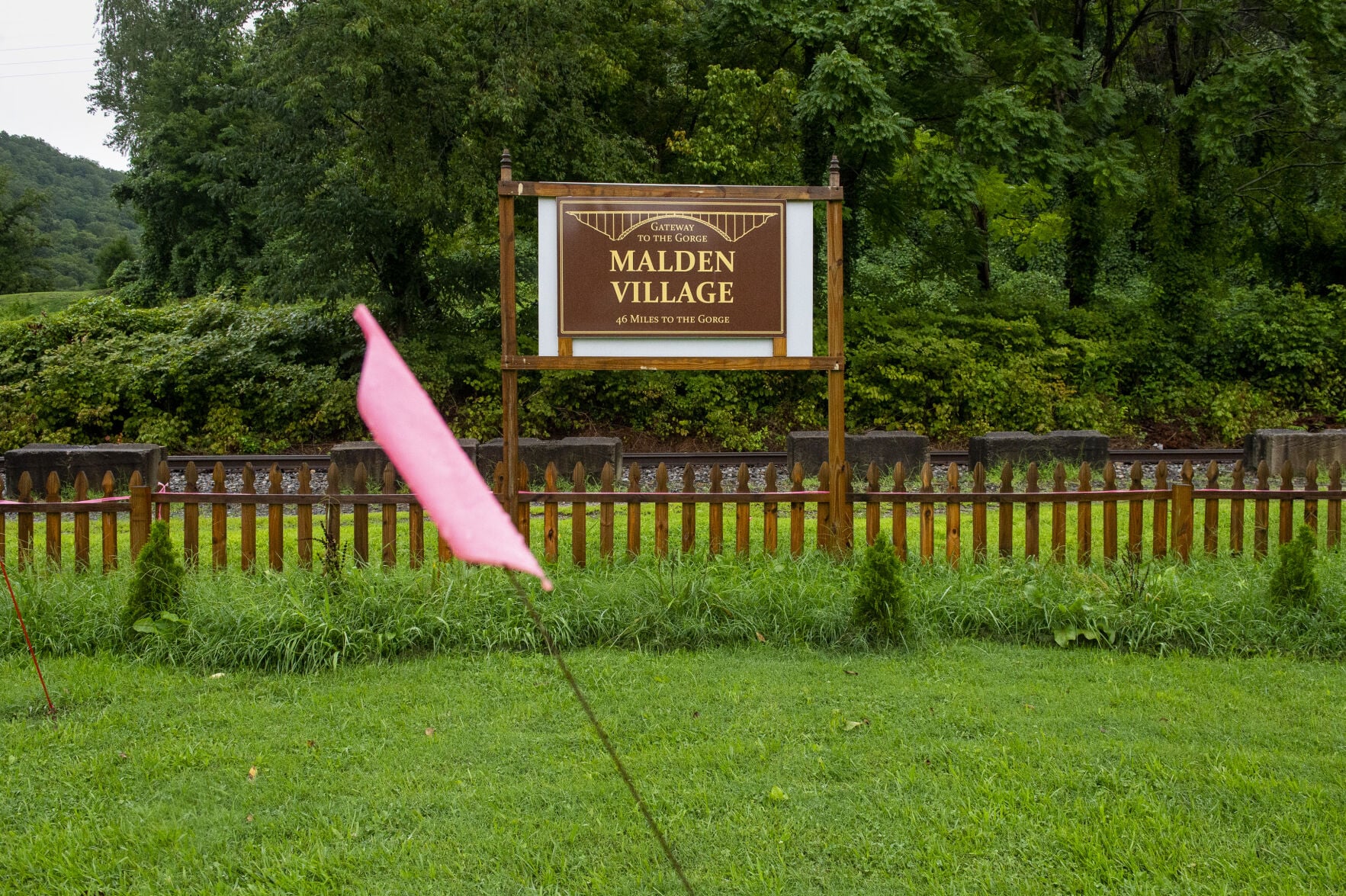
The Ruffner Cabin will be moved to a park in Malden Village in Malden, Tuesday, Aug. 11, 2026.
LAURA BILSON | Gazette-Mail
Having the historic building in Malden "helps us tell the story of 19th-century salt-making in the Kanawha Valley, which, at one time, produced 3.2 million bushels of salt a year," Rowe said. "It will also help us tell the story of slavery used to produce that salt."
Kimberli Milhoan, director of the Friends of Malden Village, said the cabin also will help Malden brand itself as a gateway city to New River Gorge National Park and Preserve, giving visitors a chance to sample area history while traveling to and from the Gorge.Â
Joseph Ruffner's son, Daniel, the first salt maker to use coal to fire brine furnaces, laid out the town of Malden in 1831 on family-owned land. Lewis Ruffner, a grandson of Joseph, and Lewis' wife, Viola, hired Booker T. Washington's mother, Jane, as a cook soon after the end of the Civil War. Viola Ruffner is credited with mentoring Booker T. Washington after he arrived at the Ruffner's Malden home at age 9.
According to the Craik-Patton House news release, the Kanawha County Commission supported moving the historic structure to Malden with a $20,000 Local Economic Development Assistance grant awarded to Bowe's company.
Evan Canterbury, of Lewisburg, moves parts of the roof from the Ruffner Cabin into a bin in ÂÒÂ×ÄÚÉä, Tuesday, Aug. 11, 2026.
LAURA BILSON | Gazette-Mail
Separate contractors will be hired by Friends of Malden Village to build a foundation for the relocated building and restore and reassemble the cabin's two stone fireplaces and chimneys.
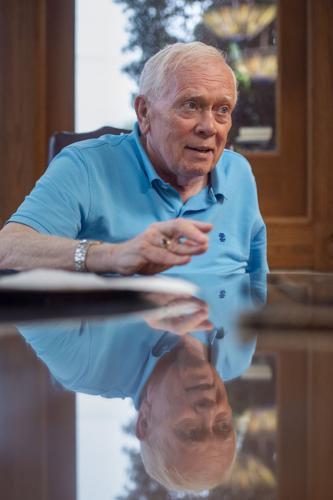
Fundraising to pay for those add-ons is underway, and "donor response has been wonderful," according to Milhoan. "We're not there, yet, but we're within striking distance."
Milhoan said she is confident the building will be reassembled and ready for its new role within 90 days. By Thursday, virtually all of the Ruffner Cabin's logs had been moved to Malden, and only the lower portions of its chimneys remained at their previous location.Â
CLICK HERE to follow the ÂÒÂ×ÄÚÉä Gazette-Mail and receive