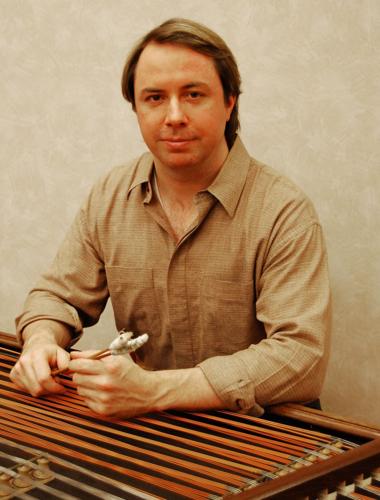
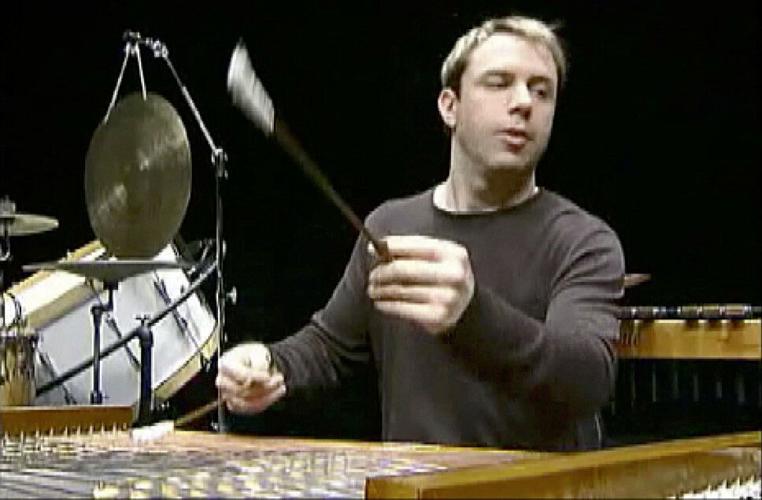
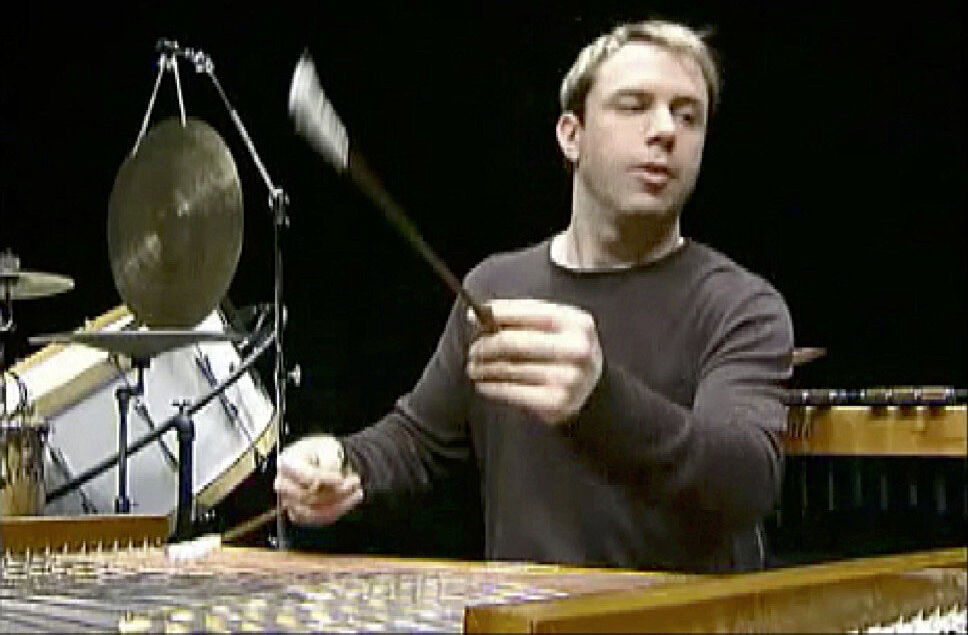
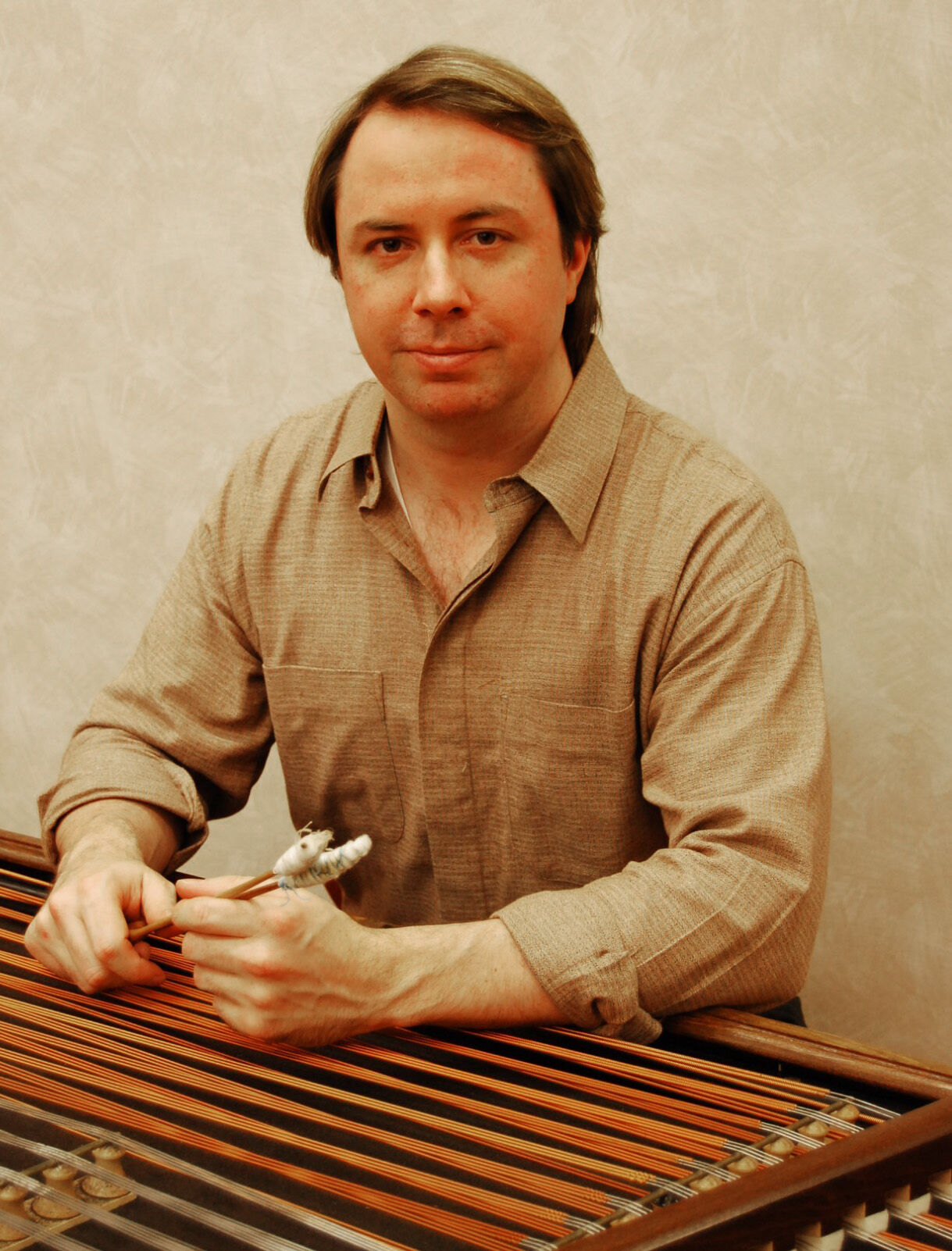
This is an undated contributed photo of musician and ÂÒÂ×ÄÚÉä native Richard Grimes playing a cimbalom.
Courtesy photo
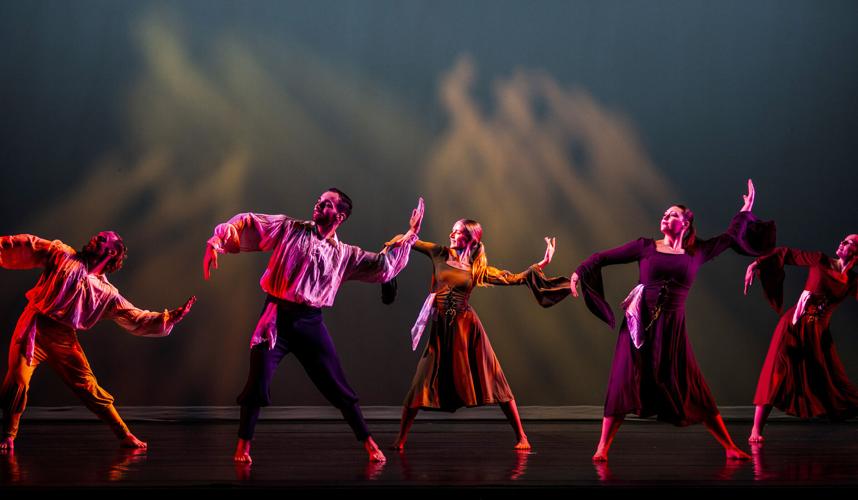
Composer, musician and bandleader Richard Grimes knows when to get out of the way. Thursday night at the Culture Center Theater, the West Virginia Dance Company will dance to one of his compositions.
The piece is a reflection of the brown bear in Dr. Seuss’, “My Many Colored Days.� The dance is about bears in hibernation, and it’s a late edition to the program.
Speaking by phone from his new home in Minneapolis, the composer agreed it was an unusual idea, but unusual is part of his brand. This piece wasn’t his idea, though, but came from the West Virginia Dance Company’s artistic director, Toneta Akers-Toler.
Grimes liked the challenge of pursuing novel topics. He does the same thing with his progressive chamber music group, Cordis.
“We think of these theme shows,� he said. “Like the effects of water on sound.�
It’s raw creativity and exploration of an idea.
Grimes also liked that what he and the dance company were doing wasn’t the kind of art people would expect from a region better known for string band music and clogging.
Grimes knows. He grew up in ÂÒÂ×ÄÚÉä.
His father, also Richard, was a journalist, serving as the longtime political columnist for The ÂÒÂ×ÄÚÉä Daily Mail.
Focusing on music at WVU
Through his teens, the younger Grimes got into music and played percussion instruments. But when he entered West Virginia University, he struggled to join their music program.
This is an undated contributed photo of musician and ÂÒÂ×ÄÚÉä native Richard Grimes with a cimbalom stringed instrument.
Courtesy photo
“The guy running the program sat me and my father down in his office,� Grimes said.
The professor told them, “You’re not good enough for this program.�
Grimes said he knew rhythms, but he’d never been taught how to read music.
The professor said that he was going to make an exception, because Grimes' father was a WVU grad.
“I’m going to give you one semester and you're going to practice your butt off,� the professor told Grimes. “And if you can’t get to the bottom level of acceptance, I’m going to let you out of the program.�
The young student threw himself into the work. He got up early, walked to the performing arts center and practiced with the timpani and the marimba. In between sessions, he went to class. Grimes said he would skip breakfast and lunch and brought a jar of peanut butter to keep him fed for the day.
“It was pretty intense,� he said.
But it paid off. Grimes stayed in the music program and excelled. He also began studying with percussionist Michael Rosen at Oberlin College. Rosen performed with symphonies, but also led the woodwinds, brass and percussion program at the Ohio school.
Rosen encouraged Grimes to apply to the Peabody Conservatory at Johns Hopkins University in Baltimore, where Grimes became interested in the cimbalom, a Hungarian instrument based on the European hammered dulcimer.
Following Peabody, he entered Yale and went to Hungary to study the instrument. Grimes electrified the cimbalom, giving it a modern edge.
With the cimbalom, he eventually built his progressive chamber group, Cordis, which has managed to find audiences who enjoy the mix of new and traditional sounds that range from classical to science fiction.
Back to his W.Va. creative roots
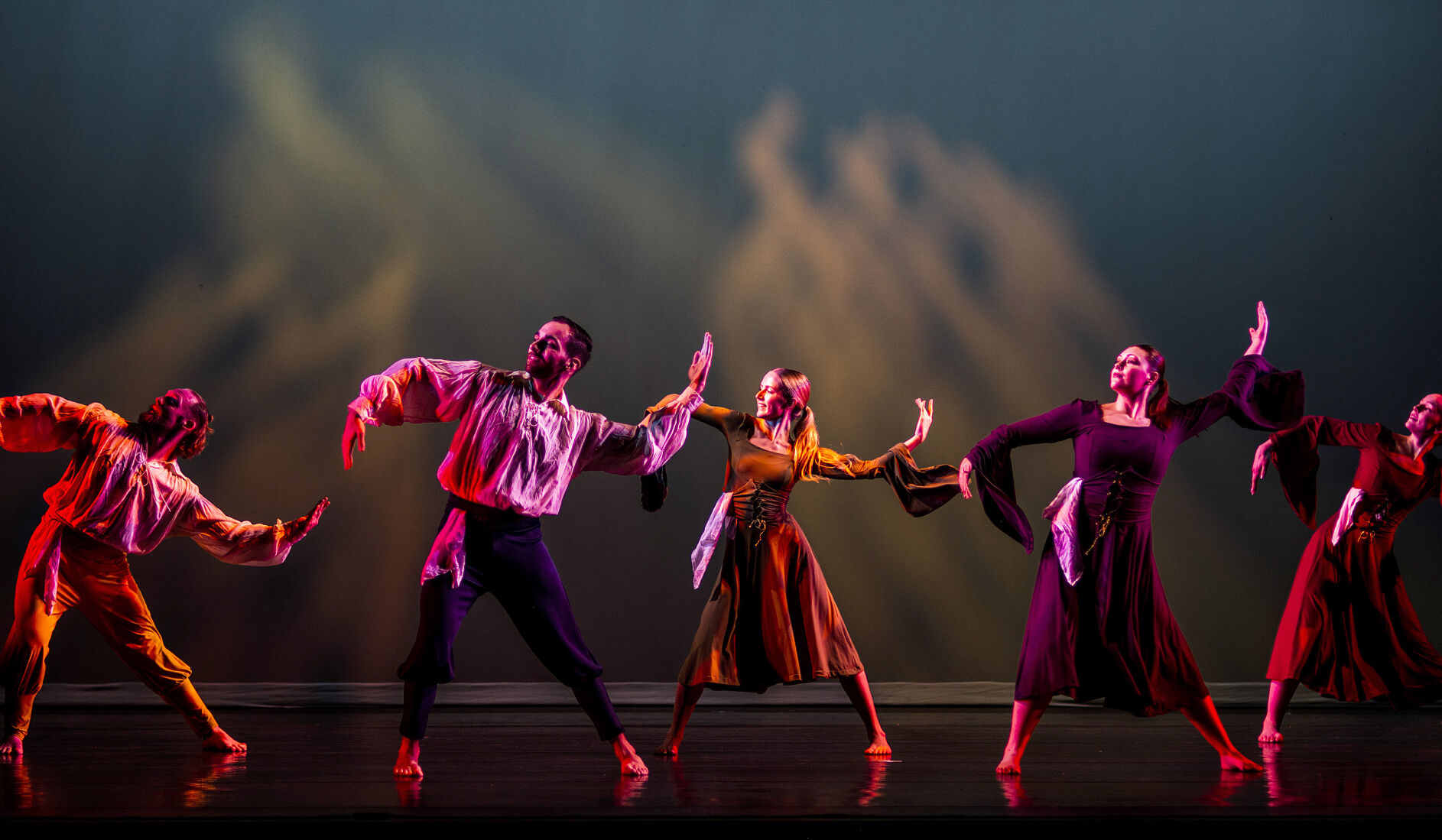
This is an undated contributed photo of dancers from the West Virginia Dance Company.
Courtesy photo
Grimes began collaborating with West Virginia Dance Company several years back through a chance meeting.
Grimes was at a regional arts conference in Pennsylvania.
“I saw this booth for the West Virginia Dance Company,� he said. “I was just so excited to see something come out of West Virginia.�
The composer introduced himself and struck up a conversation with the woman at the table, who invited him to talk to Toneta Akers-Toler.
“Toneta wanted to take something that was born in the Mountain State and bring it to the world,� he said. “But we were both so sick of the hillbilly stereotypes.�
Grimes said a lot of artists lean into that and into the cozy feel of “country roads.�
He wouldn’t deny that it was popular.
“But that’s not all there really is to West Virginia,� he said.
Through his work and his collaborations with the West Virginia Dance Company, he’s tried to show that. For the FestivFALL piece, Grimes partnered with dance company choreographer Maureen Mansfield Kaddar.
The material has allowed Grimes to make some whimsical leaps.
“We’re using a sousaphone,â€� he said, a tuba-like instrument named after composer John Philip Sousa.Â
Grimes said composing the music has been a thoughtful conversation between he and Kaddar, though he’s been given a lot of room to explore. Grimes figures out the score. Kaddar figures out what the dancers need to do.
Grimes said, “I never get involved in the choreography.�
But they pass notes back and forth.
“She tells me what she has in mind, and I have ideas, too,� he said. “Often she tells me to make this section a little longer or make that section a little shorter.�
Grimes was excited that people would get to see and hear their work, though he won’t see this performance.
The composer said he gets home to ÂÒÂ×ÄÚÉä when he can, mostly when his daughter, Ellie, 15, is on break from school.
“We go to the New River Gorge. We go to Hawks Nest and Pipestem. We’ve caught Regatta a couple of years in a row,â€� he said. “I really want her to understand ÂÒÂ×ÄÚÉä and West Virginia. It means a lot to me.â€�