
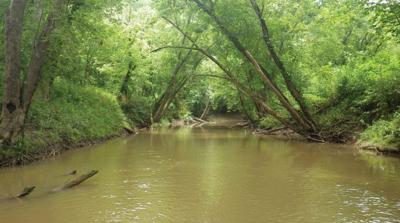

The West Virginia Department of Environmental Protection has asked to intervene in a federal lawsuit that yielded a proposed settlement establishing a plan to clean up a local watershed spanning roughly 100,000 people.
The DEP said in a court filing Monday that it is “flummoxed as to why it has been kept in the dark� on a proposed settlement the EPA reached with environmental groups that would require the EPA to set clean water restoration plans that address toxicity in the Lower Guyandotte River watershed.
The DEP said it was “even more astounded� that the EPA decided “not to mount any kind of defense� and instead approve the proposed settlement rooted in the DEP declining to submit to the EPA any plans to slash pollutants for ionic toxicity in the watershed.
The agreement proposed in federal court would settle a lawsuit the groups filed against the EPA last month contending the EPA has not calculated maximum pollution amounts in the Lower Guyandotte River watershed that would allow the watershed to meet water quality standards. The EPA reached the proposed agreement with the Sierra Club, the West Virginia Highlands Conservancy and the West Virginia Rivers Coalition.
The Lower Guyandotte River watershed occupies most of West Virginia’s Cabell and Lincoln counties, as well as the northern third of Logan County and small portions of Putnam, Boone, Kanawha and Mason counties. Major tributaries in the Lower Guyandotte River watershed include:
- Mud River
- Trace Fork
- Middle Fork of Mud River
- Fourmile Creek
- Big Harts Creek
- Big Ugly Creek
Under the proposed settlement, the EPA would have to establish total maximum daily loads for ionic toxicity for 11 waterbody segments in the Lower Guyandotte River watershed by Jan. 15, 2025.
Total maximum daily loads, or TMDLs, determine a pollutant reduction target and allocate load reductions for pollution sources.
West Virginia environmental groups have pushed regulators for years to establish standards for ionic toxicity that they’ve linked to mountaintop removal and other surface coal mining methods.
The groups see the proposed settlement as a safeguard against pollution that makes water too salty for aquatic life to survive, disrupting ecosystems, impacting drinking water quality and increasing water treatment costs.
Stories you might like
- WV home energy rebate program opens limited pilot phase, still no statewide launch
- Federal investigators' update on fatal Nitro chemical incident flags safety concerns
- Justice firms face new federal tax liens for $8.8M+, new DEP lawsuit seeking $2.9M+
- WV lagging in implementing home energy savings programs amid high cost strain
DEP: Proposed deal shouldn’t be ‘rushed’
But the DEP’s Monday filing asserts the potential establishment of ionic toxicity waste load allocations is “highly likely to have statewide ramifications,� the agency said, and “should not be rushed through a secretly negotiated consent decree.�
The DEP accused the EPA and the environmental groups of asking the court to erase what the former agency said is its right to set up priorities for the TMDL program.
Sen. Joe Manchin, D-W.Va., released a statement on April 1 saying he was “deeply concerned� by the proposed settlement.
Manchin said that, if the EPA had any “legitimate water quality concerns,� it should have worked with the DEP, which he said “knows our waterways better than the federal government ever will.�
The environmental groups’ lawsuit cited a 2017 federal court finding that, because the DEP hadn’t submitted TMDLs for water biologically impaired due to ionic toxicity, the EPA had a duty to act. That 2017 court ruling noted that, since 2006, the DEP had determined ionic toxicity was the stressor causing biological impairment in at least 179 streams but had stopped issuing TMDLs addressing biologic impairment regardless of the cause in 2012.
The ruling noted that the DEP had contended it had insufficient information regarding pollutants and their associated impairment thresholds for biological TMDL development for ionic toxicity-stressed streams. The DEP had designated “mining� as the source of biological impairment for streams that had undergone a stressor identification process that identified ionic toxicity as a significant stressor as early as 2008, the ruling notes.
Environmentalists see the proposed settlement as long overdue progress toward holding coal mining operations accountable for pervasive pollution.
West Virginia’s percentages of public water systems with violations have been rising even as the same clips have been steady nationwide.
Just shy of a third of all West Virginia public water systems had violations in 2015, compared with 25.9% nationwide. By 2022, West Virginia’s rate of systems with violations had risen to 80.2%, while the national percentage increased only to 27%.
CLICK HERE to follow the ÂÒÂ×ÄÚÉä Gazette-Mail and receive


