President Donald Trump's left ankle shows swelling in the Oval Office on July 16, 2025. Trump was recently diagnosed with chronic venous insufficiency, a common condition usually identified by swelling in the legs.
President Donald Trump's left ankle shows swelling in the Oval Office on July 16, 2025. Trump was recently diagnosed with chronic venous insufficiency, a common condition usually identified by swelling in the legs.
ALEX BRANDON | AP photo
President Donald Trump was recently diagnosed with chronic venous insufficiency, a common venous condition usually identified by swelling in the legs.
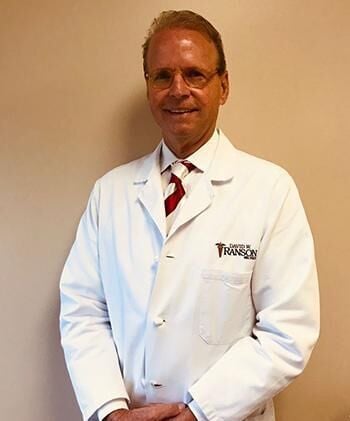
General and vascular surgeon Dr. David Ranson stands in his South ÂÒÂ×ÄÚÉä office on Wednesday, July 23, 2025.
ASHTON PACK | HD Media
General and vascular surgeon Dr. David Ranson, — who practices at WVU Medicine | Thomas Hospitals, ÂÒÂ×ÄÚÉä Area Medical Center and Boone Memorial Hospital in Madison — said the condition is caused by the valves of the veins working improperly and causing the blood to flow backwards, leading to pooling and swelling in the legs.
“That leads to a whole cascade of problems, which are varicose veins, aching, pain, swelling, cramping, heaviness, itching, restless leg syndrome and, eventually, skin changes and discoloration of the lower legs, which can lead to open sores or ulcers,� Ranson said.
Arriving at a diagnosis
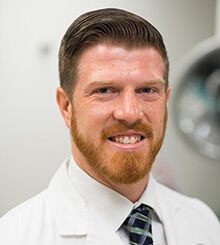
Dr. Jason Mader is a cardiologist and assistant professor at Marshall University's Joan C. Edwards School of Medicine and Marshall Health.
Courtesy photo
Dr. Jason Mader, Marshall Health cardiologist and assistant professor at the Marshall University Joan C. Edwards School of Medicine, said diagnosing the condition usually begins with a physical exam of the legs and the leg veins.
“Once we do the clinical diagnosis, then, often, I’ll send folks for something called venous reflex studies and lower extremity duplex ultrasounds,� Mader said. “The reasoning for this is I’m looking to see if there’s any old clots that could damage the veins, [and] the venous reflux study measures to see if there is reflux of blood backwards through the vein valves in the leg.
“Sometimes, we will do something called a venogram or intravascular ultrasound of the iliac veins up in the pelvis, just to make sure we don’t have any stenosis or compression there,� Mader said.
Condition is not rare
Mader said he commonly encounters the condition in his line of work.
“It’s interesting. I see it a lot. In fact, I get a lot of folks that come in referred for potential heart failure and it’s actually chronic venous insufficiency,� Mader said. “If you look at the literature, vein abnormalities can be up to 50% of individuals. You have varicose veins, which can be anywhere from 10 to 30% of the population.�
Mader said risk factors for the condition include obesity, smoking and working in positions that involve standing for hours at a time.
How it’s treated
Treatment options for the condition are usually simple, involving compression and elevation of the legs, although, sometimes, more measures are needed, depending on what is found during the diagnosis, Mader said.
“If, say, I find stenosis or compression, sometimes stenting is warranted in those areas. If I find blood clots, we need to treat the blood clots,� Mader said. “After that, it’s generally conservative measures, so compression stockings, trying to elevate the legs as much as possible through the day. The whole role is generally to try and catch it early and do all the lifestyle modifications to prevent us getting to the point that we have to do any type of ablation or wound care.�
Ranson said that, alongside the other treatment options, there also has been a recent treatment option developed involving an ablation of the vein to redirect the blood.
“Now, there’s a procedure which has basically revolutionized the treatment of this chronic problem which over 30 million people in the United States have,� Ranson said. “This procedure is a radiofrequency ablation of the vein, or shutting the vein down that refluxes, therefore shunting the blood and rerouting the venous blood to other veins that work properly to get the blood back to the right side of the heart.�
Ranson said the procedure is simple and ambulatory, meaning patients can return home the same day the procedure is performed.
“It is a low-risk procedure. I do this procedure in my office, and it takes 15 to 20 minutes to perform,� Ranson said. “The patient walks in to have the procedure done and walks out and drives himself home.�
The importance of a diagnosis
Although it affects a large portion of the population, Ranson said the condition often goes undiagnosed.
“The condition is extremely common," Ranson said. "Over 30 million people in the United States are afflicted with this. It is a very underdiagnosed problem because it is a progressive problem, and it progresses very slowly and starts out with very minimal symptoms.�
When the condition goes untreated, it can lead to major side effects requiring long-term care, Ranson said.
“What happens is, the patient will develop chronic pain, heaviness or tiredness of the legs, skin changes at the end point of the disease process ... which can lead to ulceration, which will require a lifetime of wound care,� Ranson said.
CLICK HERE to follow the ÂÒÂ×ÄÚÉä Gazette-Mail and receive