The legislative session is over, but the disappointment for many is not.
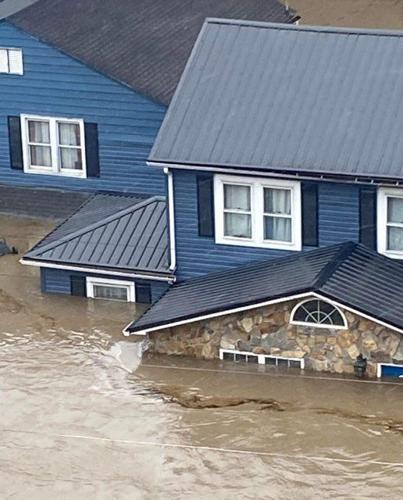
“They can sit up there in their suits all day long,� BabyT Sexton of Williamson said Wednesday, two months after flooding devastated the southern coalfields, displacing her aunt and uncle, triggering a State of Emergency for 14 counties and leaving three people dead in McDowell County. “But while you’re sitting up there talking about petty stuff and stuff not going to help us, there’s people literally living out here that haven’t had a bath in three days.�
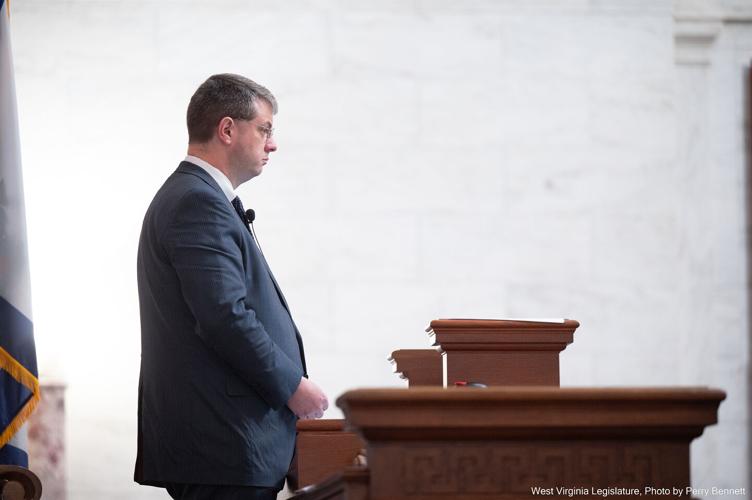
The target of Sexton’s ire was the West Virginia Legislature, whose 60-day session ended April 12 without it approving any money for a flood resiliency trust fund created in 2023. No money has been approved for the fund in three years.
Sexton, a community advocate, has been engaged in resident recovery efforts she and others say are far from over.
“People literally got wiped off the map down here,� Sexton said, lamenting a lingering lack of housing in the area following the flooding.
The Rev. Brad Davis, an elder in the United Methodist Church serving five churches throughout McDowell County, said From Below: Rising Together for Coalfield Justice, a social justice initiative of the West Virginia Faith Collective, has a list of over 300 households still in need of help with initial cleanup.
Damaged bridges and roadways are still limiting access, Davis said, including a neighborhood in the McDowell County town of Gary, where residents are forced to walk railroad tracks to get in and out.
“The need still is great,� Davis said.
Flood resiliency experts say the need to mitigate impacts like those still reverberating throughout the poverty-plagued southern coalfields is great, too.
“The best time to invest in the Flood Resiliency Trust Fund was two years ago when it was created,� Mathew Sanders, senior officer for state resilience policy at the Pew Charitable Trusts, said in an email Monday. “The second best time is now.�
The trust fund was created in 2023 via that year’s Senate Bill 677 to prioritize nature-based flood protection and prevention solutions for low-income areas. SB 677 listed a $40 million potential — but not required — allocation for the trust fund. The Legislature has yet to direct any money to the fund.
Pew Charitable Trusts, a global public policy organization, helped craft SB 677.
Sanders observed that with each passing year the trust fund stays empty, more communities across West Virginia are deluged by increasingly frequent and severe floods.
“Proactive solutions to reduce flood risk pay for themselves over time, and this is an investment the state cannot afford to put off any longer,� Sanders said.
In the Republican-supermajority Legislature, a bill pushed by House of Delegates Democrats that would have approved a one-time $100 million allocation from the state Revenue Shortfall Fund, also known as the Rainy Day Fund, stalled in the House Government Organization Committee. House Bill 3502, led in sponsorship by House Minority Leader Sean Hornbuckle, D-Cabell, also would have allowed $150 million in excess monies in the state Income Tax Reserve Fund to be deposited in the Flood Resiliency Trust Fund.
The House on April 4 rejected a Hornbuckle-proposed amendment to the state fiscal year 2026 budget bill, House Bill 2026, that would have directed $50 million to the Flood Resiliency Trust Fund from the Rainy Day Fund, which contains over $12 billion, according to Auditor’s Office data — roughly 240 times how much the amendment would have removed for flood resiliency.
“[T]his is what this fund is for,� Hornbuckle said in a House floor speech in support of the amendment. “And folks, we all know it’s raining.�
But House Finance Committee Vice Chair Clay Riley, R-Harrison, opposed Hornbuckle’s proposal in his own House floor address, asserting investment markets would view the move as a sign of instability.
“It will damage our reputation,� Riley said.
A different flood aid outcome in Kentucky
Leaders in Kentucky paid no mind to fiscal reputation upon announcing on March 31 their state passed legislation providing greater financial support for communities recovering from much of the same flooding event that hit West Virginia the month before.
Kentucky’s HB 544 allows $100 million to be spent on flood aid from the 2024-26 state budget for governor-declared emergencies from general fund surplus or budget reserve trust fund accounts.
“With this bill, we’re making sure communities in crisis get the help they need — faster and with greater certainty,� Kentucky Senate Appropriations and Revenue Committee Chairman Chris McDaniel, R-Kenton County, said in a statement. “This is responsible governance, ensuring relief gets to where it’s needed while maintaining accountability.�
“It does seem like Kentucky is on the ball,� Sexton said.
Spokespeople for Gov. Patrick Morrisey and Senate President Randy Smith, R-Preston, did not respond to requests for comment.
When asked about the lack of Flood Resiliency Trust Fund support, Speaker Roger Hanshaw, R-Clay, pointed to the Governor’s Office Civil Contingent Fund, according to House Deputy Chief of Staff and Communications Director Ann Ali.
A $5 million line item was included in the Legislature-approved budget for the governor-controlled Civil Contingent Fund, which state code says may cover expenses for any law for which there’s no special appropriation any anything else the governor deems necessary.
Ali noted the General Revenue Budget includes funding for Upper Mud River flood control ($179,084) and a state early warning flood system ($1,487,801), as well as $626,650 for the State Resiliency Office established in 2017 and responsible for protecting communities against extreme weather and other disasters.
That $626,650 sum is a 2% decrease from the prior year’s budget when adjusted for inflation.
State Resiliency Officer Bob Martin told the Joint Legislative Funding Committee during a December 2023 interim legislative session his office probably could execute projects if it had what it was looking for in federal or state support, noting there was no money in either the flood resiliency fund or the Disaster Recovery Trust Fund.
Over 1,400 more flood events since 2016
Davis said that while the funding targets identified by Ali on Hanshaw’s behalf are needed, they fall far short in sufficiently addressing urgent needs in the southern coalfields.
“We won’t be satisfied with crumbs from the master’s table when our communities remain devastated and our people continue to suffer,� Davis said. “Our lawmakers have made it clear that bond ratings and profit, rather than the people, are their priority. All we’ve asked of them is to do what’s right by the people, and they continue to turn their backs.�
The Legislature not allocating funding for the Flood Resiliency Trust Fund disappointed the West Virginia Rivers Coalition, said its executive director, Jennie Smith.
“The lack of investment sends a clear and troubling message,� Smith said, “that proactive flood protection and community safety are not being prioritized at the level they should be.�
Smith noted flooding is becoming more frequent and more severe.
West Virginia’s narrow valleys and steep slopes make it especially vulnerable to flooding impacts.
More than half of West Virginia’s critical infrastructure — including fire, police and power stations — is at risk of becoming inoperable due to flooding, according to a 2021 First Street Foundation study. West Virginia’s share of critical infrastructure at risk of being inoperable due to flooding was higher than any other state.
But West Virginia has grappled with more than just risk since a June 2016 flood killed 23 people and temporarily displaced over 2,000.
Since that flood through 2024, the Mountain State suffered over 1,400 more flood and flash flood events causing 10 deaths and more than $51.6 million in property damage, according to National Oceanic and Atmospheric Administration data. Floods are longer-term events that may last days or weeks, while flash floods are caused by heavy rainfall in a short period of time, usually under six hours.
Flooding is West Virginia’s costliest and most severe natural hazard, according to the NOAA.
Pew Charitable Trusts has noted flood mitigation is more effective than flood recovery, citing research showing that every $1 invested in flood mitigation saves $6 in cleanup.
“If it does hit again, we need our drain pipes cleaned out, because it’s going to be worse than it was last time,� Sexton said. “And that funding money could have been used for that sort of thing.�
State Senate looks to Trump
From Below and other community advocates are urging Morrisey to convene a special legislative session to address the Flood Resiliency Trust Fund.
But even before the regular legislative session ended, the state’s senators were punting on the to the feds on the issue.
On the session’s final day, the Senate adopted Senate Resolution 50, which requests the federal government to provide resources and needed approval for stream and river restoration, including debris removal, stabilization of river and creek beds, and restoration of natural water flow patterns.
“We could be saving a lot of money if FEMA didn’t have to come in every year, every other year, and fix things,� Sen. Rupie Phillips, R-Logan, said in a Senate floor speech in support of SR 50.
SR 50 directs that it be sent to President Donald Trump and Elon Musk “in his capacity as special government employee� heading operations at the Department of Governmental Efficiency, a new commission the Trump administration has charged with cutting federal spending.
“[E]veryone [should be] printing this off, making a copy,� Senate Energy, Industry and Mining Committee Chairman Chris Rose, R-Monongalia, said in a Senate floor speech. “Heck, even make two of them, so we can stop all this flooding every time, every year, over and over.�
But federal support to mitigate future flooding is decreasing under Trump, not increasing.
On April 4, the Federal Emergency Management Agency announced it was ending its Building Resilient Infrastructure and Communities program, which has supported states and local governments in their work to lower hazard risks. As part of the move, FEMA said it was canceling all BRIC applications from fiscal years 2020 through 2023.
Project 2025, a proposed presidential transition project overseen by past and present Trump administration officials before his reelection, calls for privatizing the FEMA National Flood Insurance Program and eliminating most Department of Homeland Security grant programs.
‘It just doesn’t make sense’
On the same day FEMA announced it was ending the BRIC program, the House of Delegates’ floor session opened with a prayer from Pastor Robert McClintic.
“God, we just ask you to be with all the flood victims here in West Virginia,� McClintic said.
The House’s rejection of Hornbuckle’s proposed amendment to fund the Flood Resiliency Trust Fund came fewer than 20 minutes later.
“Just about 16, 17 minutes ago, [McClintic] asked us to all stand in prayer for flood victims and flooding across our state, and we all stood up, and we prayed,� Hornbuckle said moments before the House’s untallied vote to reject his proposal. “Now we have the ability to do something earthly — the power that we have.�
Sexton wishes state leaders would use it.
“You can’t sit up there and pray for flood victims and then turn around and not pass anything for the flood victims,� Sexton said. “It just doesn’t make sense to me. What would Jesus do? Come on now.�