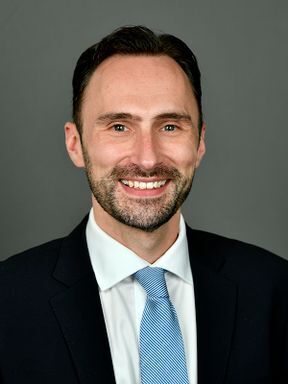
Joshua Weishart is a WVU law school professor who announced, in April 2024, that he’s voluntarily leaving his job because of the university’s “Academic Transformation� plan.
MORGANTOWN — Joshua Weishart has called the West Virginia University College of Law home for the past 12 years.
Joshua Weishart is a WVU law school professor who announced, in April 2024, that he’s voluntarily leaving his job because of the university’s “Academic Transformation� plan.
Now, just months after university administrators reduced law faculty by five as part of “academic transformation,� the West Virginia native and WVU alum is choosing to leave the state’s only law school.
“We were not planning to leave,� Weishart said, “and that’s disappointing.�
The Berkeley School of Law graduate and 2016 Law Professor of the Year is one of seven faculty members choosing to part ways with WVU Law outside of the voted cuts. Six of these faculty announced their voluntary departure during the spring 2024 semester.
Before the voluntary departures, academic transformation efforts reduced College of Law faculty to 24. Now, the law school could have less than 20 faculty members.
Weishart said he “agonized� over the decision to leave WVU, but felt it was his only option.
WVU hopes to have a ‘positive hiring report’ by July 1
Law school dean Amelia Rinehart confirmed the seven voluntary departures in an email sent to law students on March 4, one day before the fall 2024 course catalog went live.
“No one can be completely surprised that recent events have led some faculty and staff to consider options they were not pursuing 18 months ago,� she said in the email.
The law school is reviewing applications following the departures and hopes to have a “positive hiring report� by July 1, Rinehart said in an email to The Daily Athenaeum.
“The importance of the law school to West Virginians cannot be understated and we consider this a part of our mission,� she said. “We are currently seeking to hire full-time faculty, some permanent and some visiting, to refill those positions.�
Rinehart said the law school has no intention of terminating “full-time long-term faculty,� as its BOG-approved faculty reduction consisted of four retirements and the dismissal of a short-term visiting faculty member.
“We did not terminate full-time long-term faculty,� she said, “and we do not anticipate doing so in the future.�
‘Changing the character and purpose of this institution’
Carrie Jo Rader, a second-year law student from ÂÒÂ×ÄÚÉä, said she is concerned for the future of the law school, given the departures.
Carrie Jo Rader, of ÂÒÂ×ÄÚÉä, is a second-year law student at the WVU School of Law.
“It just breaks my heart for the young lawyers of West Virginia,� she said, “because I’m afraid one day you might not have a law school to go to in West Virginia.�
Weishart said that, while many factors contributed to his departure, “academic transformation� was his final straw.
“What saddened me the most about this whole thing, speaking as a native of West Virginia, as an alum of the university, as a professor at the law school, is that this transformation is also changing the character and purpose of this institution, it’s culture,� he said.
Academic transformation isn’t the only thing that’s influenced the departure of law faculty. In 2022, the BOG changed its Governance Rule 1.4, “Ethics, Conflicts of Interest, and Outside Consulting Arrangements,� requiring faculty to request permission from the Dean’s Office before engaging in legal representation considered “adverse to West Virginia University or the State of West Virginia.�
Weishart said the change violated his “legal and ethical obligations� to clients in such cases, resulting in his decision to cease all involvement in legal representation that would require approval, aside from cases he was already involved in.
Rinehart said she has not observed any tension regarding the rule change and said she has approved all requests since its implementation.
Nicole McConlogue, the college’s former clinical law director, delivered her departure notice in March 2023.
McConlogue said that, while the cuts dishearten her, her departure came as a result of issues in her program.
“I was very conflicted,� she said. “I only lived in West Virginia for three years, but it’s the kind of place that grows on you and gets under your skin.�
Law clinics not ‘sufficiently resourced or supported’ by the university
Third-year law students are required to complete six credits worth of “experiential learning� for their capstone, which can be earned through participation in the school’s in-house clinics, according to the college’s website.
The clinics serve as one of the largest legal service providers in West Virginia, McConlogue said, allowing residents to receive free legal representation from law students supervised by faculty.
McConlogue oversaw the college’s 10 law clinics but was the main adviser for the General Practice Clinic, also known as the General Litigation and Advocacy Clinic, after she was hired in 2020. Since her departure, the clinic has remained closed.
McConlogue said she felt the clinics were not “sufficiently resourced or supported� during her time at the university, sparking her departure.
Rinehart said the college is seeking a full-time faculty member to direct the closed clinic, and that law clinics are more expensive to run on a “per credit hour, per student basis.�
“For this reason, we are taking care to explore all funding sources and to consider carefully the right mix of clinics and experiential learning needed for our students to succeed right away in the legal profession,� she said.
Two additional law clinics, the Entrepreneurship and Innovation Clinic and the Low Income Taxpayer Clinic, also recently closed.
Rinehart said both clinics were directed by externally funded staff attorneys through grants and private funding opportunities that are no longer available.
The clinics will not be revived unless a new source of external funding is obtained, as the college cannot currently commit to hiring full-time faculty to fill the positions, she said.
Rinehart said students looking to enroll in the Entrepreneurship and Innovation Clinic were offered externships to fulfill their capstone requirement, and those interested in the General Practice and Low Income Taxpayer Clinics were offered spots in the other clinics.
McConlogue said she worries that the closure of the three clinics could affect students’ willingness to enroll at WVU Law.
However, Alison Peck, law professor and director of the Immigration Law Clinic at WVU, said she is not concerned about the closures of the clinics, as they all focus on key skills for lawyers.
Peck announced in a blog post on Feb. 12 that she had no intentions of leaving the university, despite changes from academic transformation.
“Let me say at the outset that I don’t blame anyone who decides to jump ship at this point,� she said in the post, “but I’m not leaving.�
Peck said she made her announcement to ease student concerns, as several faculty members were announcing their impending departures.
“I think it’s going to be a hard year for us next year,� she said. “We’re losing some wonderful people.�
Although she is concerned about the faculty departures, she said the cuts have not affected the immigration work she set out to do when she was hired in 2008.
She said she expects class offerings to be lessened because of the departures but is confident the college is working to hire new faculty members.
Rinehart said class offerings for the fall 2024 semester are “roughly� the same as in past years, but some courses have not been assigned an instructor yet. She said those decisions will be made prior to the first day of classes.
Weishart hopes for a turnaround at WVU, despite his decision to leave law faculty
Despite deciding to leave WVU, Weishart said he hopes things turn around for the college.
“I’m very grateful that I’ve had the chance to have the privilege to love our students,� he said. “Our students are very respectful, polite, earnest, hardworking and unentitled. That kind of student who just really wants to go out and, you know, be a good lawyer and earn a decent living and make a difference.�
Rader, a student of Weishart, said he was her favorite professor and referred to his departure as “the biggest loss� for her academic career.
“He’s just brilliant. There’s so many professors there that are just really brilliant people, and we need people like that teaching the youth of our state,� she said. “I feel like West Virginians don’t get a lot of the opportunities that someone in a higher-income state might.�
Rinehart said the college is aware that some students might lose their mentors because of the departures.
“We do everything we can,� she said, “to ensure that there is no loss in continuity of faculty supporting the academic and professional development of our students.�
CLICK HERE to follow the ÂÒÂ×ÄÚÉä Gazette-Mail and receive