

LEWIS COUNTY — “There’s no mountain there anymore. They took the forest away.�
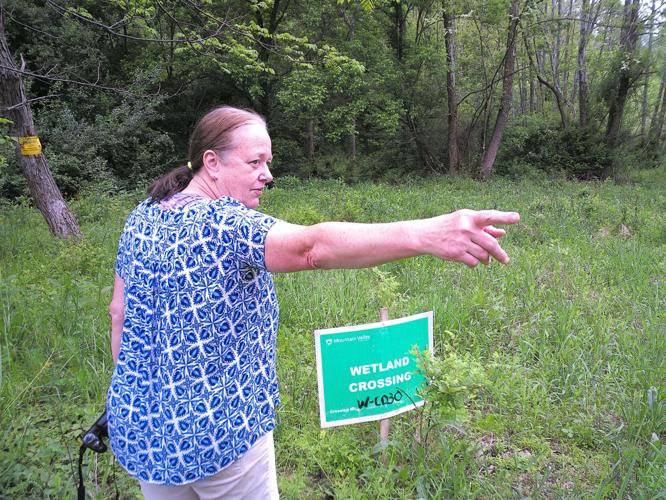
Suzanne Vance’s resigned voice carried above the gravel crunching under her Honda Ridgeline on the access road near the edge of her Lewis County property.
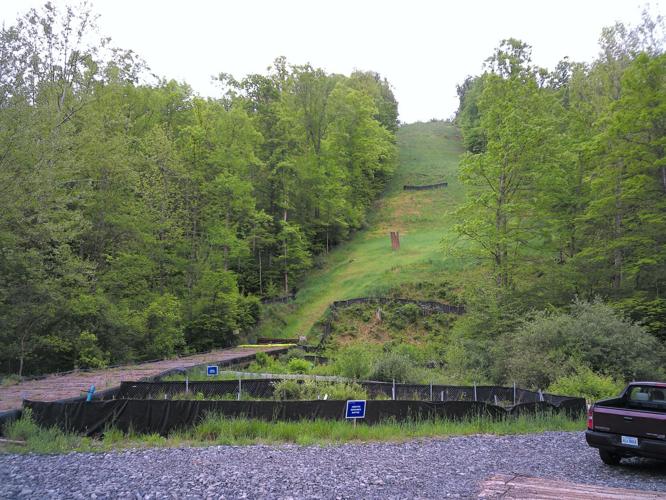
On her right was a 125-foot-wide deforested right-of-way for the Mountain Valley Pipeline. The right-of-way stretched down a steep slope in the headwater valley of Second Big Run, a stream that showed no signs of aquatic life during her walk through it earlier on a cloudy May afternoon.
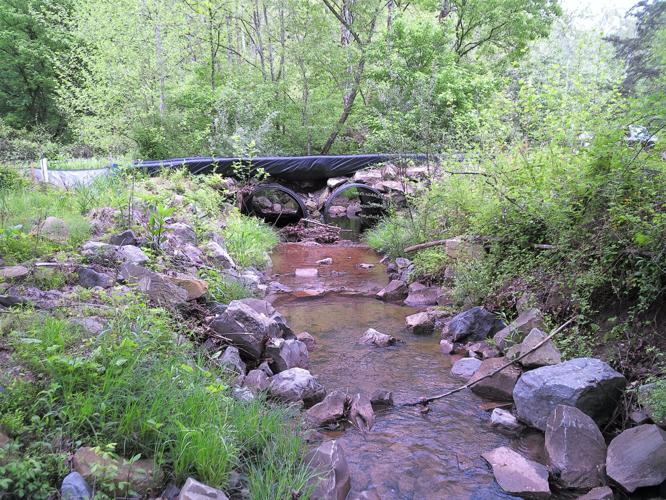
Vance says deforestation and mountain removal to clear way for the pipe have wreaked havoc on the farm that’s been in her family for 120 years. Tree-clearing that began in 2018 has resulted in road washouts and sedimentation driving fish out of Second Big Run.
Vance recalled four major and many smaller floods in the past five years as she waded through Second Big Run.
“You don’t even want to be in the back of my valley in your pickup truck,� Vance said about area flooding during a morning drive along Oil Creek Road, an artery winding through rural Lewis County dotted with “high water� and “low water bridge� signs. “You could get washed away.�
It’s the only access road for Vance and her neighbors and has been flooded out up to four times a year, Vance said at the wheel as gray skies loomed overhead.
Vance has warned federal regulators of her concerns, sending them photos documenting landslides and other signs of erosion, poor drainage, buckled wetland timber mats, and pipe left sitting and sinking in mud.
“I don’t think they will be able to stabilize this barren mountain side,� Vance wrote in an October 2021 filing she sent to the Federal Energy Regulatory Commission, the lead federal agency tasked with overseeing the project.
“[T]he pipeline ROW [right-of-way] … is now responsible for a permanent increase in the amount and velocity of the water, and increased sedimentation going into Second Big Run. The entire watershed has been permanently impacted and damaged,� Vance wrote in a January 2022 FERC filing.
“For the life of me, after having them on our property almost 5 years, they don’t have a grip on the erosion and sedimentation issues,� Vance wrote in a July 2022 FERC filing.
The latter filing urged the FERC to deny Mountain Valley Pipeline developers’ request for another four years to finish the project after predicting springs would erupt along the deforested right-of-way and undermine the pipeline’s integrity. Vance shared a photo of a pipe jutting out of the steeply sloping, deforested hillside she said would slip due to water getting underneath it.
A 2-1 ratio of West Virginia commenters and a 4-1 ratio of Virginia commenters urged the agency to reject the request by Mountain Valley Pipeline LLC, the joint venture behind the project, which runs through 11 West Virginia counties into Virginia.
Commenters against extending the project argued it would result in continued water quality degradation, risk pipeline explosions and allow an unacceptable level of greenhouse gas emissions.
Marjorie Lewter of Giles County, Virginia, told the FERC she was observing muddy waters pouring from the pipeline right-of-way near her home with every rain.
“They have tried and failed to deliver on their pipe dream,� Lewter wrote. “It won’t work here.�
But the FERC approved Mountain Valley’s request for a four-year extension in August, giving the developers until October 2026 to finish and place into service the pipeline first announced in 2014. The FERC ruled that environmental concerns raised by the project’s opponents didn’t justify additional analysis.
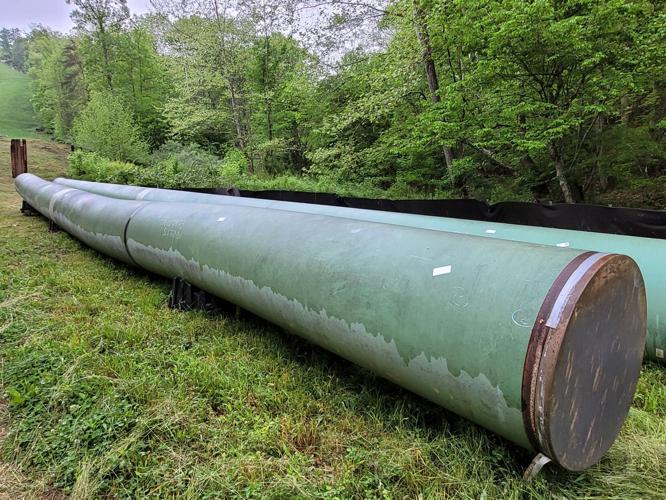
With a heavy rain just minutes away on that cloudy afternoon 10 months later, Vance got out of her truck and glared at the deforested right-of-way. Behind her sat 42-inch-diameter pipe for the project dated July 2016.
“It’s always draining,� Vance said of the smaller pipe jutting out of the hillside above. “Is this a feasible project? No.�
But now it’s congressionally required.
The Senate on Thursday night sent a deal to suspend the nation’s debt ceiling and avoid default that includes a provision designed to force completion of the Mountain Valley Pipeline. The surprise approval of the provision resulted from an agreement between President Joe Biden and House of Representatives Speaker Kevin McCarthy, R-Calif.
Signed into law by Biden on Saturday, the legislation prohibits legal challenges of permitting processes that have held up the project because of its lengthy history of environmental issues.
Virginia’s senators, both Democrats, supported removing the pipeline provision from the deal, called the Fiscal Responsibility Act, or H.R. 3746.
“We shouldn’t let an unhappy corporation go to Congress to bypass the process everybody else goes through,� Sen. Tim Kaine, D-Va., said in a statement, criticizing the pipeline for taking away Virginians’ land. “Everyday people don’t get that deal.�
West Virginia’s senators hailed the deal, touting a projected boost in local tax revenues and energy supply.
“We’re not trying to skip any review process,� Sen. Joe Manchin, D-W.Va., said during a Tuesday news conference of the pipeline provision in the deal designed to do exactly that.
Manchin and Sen. Shelley Moore Capito, R-W.Va., have discounted court rulings holding up the pipeline by finding that federal agencies failed to account for environmental damages from the project, alleging court bias and dismissing opposition to the project based on safety concerns as unfounded.
Capito said she wouldn’t have a problem with a 42-inch-diameter pipeline crossing within 100 yards of her home during a news conference Thursday.
“I trust that the safety aspects would be addressed,� Capito said.
Manchin claimed in his Tuesday news conference and in a Thursday Senate floor speech that “reseeding� would be key to environmental reclamation for the project.
“You’re not moving a mountain. You’re not taking a hillside off,� Manchin said Tuesday, two weeks after Vance had glared at the pipeline right-of-way-girdled hillside she’s been warning regulators about for years.
“No amount of grass seed is going to restore that embankment erosion and sedimentation,� Vance said Friday.
The result is a pipeline that critics say has caused permanent damage setting the stage for a major accident.
More than three-quarters of the Mountain Valley Pipeline route in West Virginia is considered to have a high incidence of and high susceptibility to landslides, according to the project’s final environmental impact statement issued by FERC staff.
“That’s a problem,� pipeline safety expert Richard Kuprewicz, president of the Redmond, Washington-based pipeline regulatory consulting firm Accufacts, Inc., said in a phone interview last summer as Capito and Manchin pushed legislation to force the pipeline’s completion that stalled. “[I]f you get a landslide, a 42-inch pipeline’s going to rupture.�
The Mountain Valley Pipeline is designed to cross over 75 miles of slopes greater than 30%. That’s an unusually high amount of pipeline over slopes that steep.
West Virginia and Virginia environmental regulators have fined Mountain Valley Pipeline more than $2.7 million for sedimentation and erosion issues.
Many landowners and conservationists fear the most environmentally consequential crossings are yet to come, contradicting arguments by Manchin and Capito the project is too close to completion not to finish.
The project has 595 stream and wetland crossings remaining, including traditional navigable waters, access roads, additional temporary work space and pipeline in West Virginia, West Virginia Department of Environmental Protection spokesperson Terry Fletcher said Thursday. That includes pipeline crossings over 189 streams and 108 wetlands.
Critics say tossing the usual permitting processes and legal review is a gamble with too little economic upside and too many Appalachian communities at risk.
“I expect to see severe damage to all the creeks and rivers,� Vance said.
W.Va. at especially high risk
Stories you might like
- DEP plan would weaken clean water protections in aboveground storage tank rule
- PSC makes clear coal comes first in FirstEnergy gas plant, APCo energy plan hearings
- Morrisey's Southern West Virginia water listening tour marred by secrecy and distrust
- DEP OKs Fundamental Data Tucker Co. site control claim for data center-linked project
Manchin and Capito have cited Mountain Valley estimates that the project is 94% finished, but the company says final restoration is only 56% done.
Mountain Valley Pipeline spokesperson Natalie Cox has defined final restoration as installation of permanent erosion control devices, return of topsoil, and seeding and mulching along the pipeline right-of-way.
West Virginia Rivers Coalition Program Director Autumn Crowe says Mountain Valley’s restoration plan lacks critical benchmarks to determine whether streams have been sufficiently restored.
“Rushing MVP through the agency approval process gives less reassurance those concerns will be addressed,� Crowe said.
In June 2022, the federal Pipeline and Hazardous Materials Safety Administration issued an advisory bulletin to remind operators of the potential for “earth movement in variable, steep and rugged terrain� to damage pipelines.
The bulletin listed 17 pipeline failures in which earth movement was a factor dating back to 2016. West Virginia was the site of three failures — more than any other state.
Natalie Cox, spokesperson for Mountain Valley Pipeline LLC, said the project team has worked with regulators to locate the pipe along ridges or perpendicular to slopes and ensure site-specific design measures are employed where appropriate. Cox said developers are performing periodic test station readings, and measuring soil resistivity and pH, to understand the effectiveness of installed permanent and temporary cathodic protection ground systems to shield buried pipe.
Some of the pipe slated for use in constructing the Mountain Valley Pipeline has been lying uninstalled along the route for years, which has prompted concerns that sunlight has compromised the pipe’s coating.
The National Association of Pipe Coating Applicators has recommended against aboveground storage of coated pipe for longer than six months without additional ultraviolet protection.
Arguing against project delays, Robert Cooper, testifying as Mountain Valley’s senior vice president in federal court in 2018, said the pipeline needed to be installed within a year to guard against the sun breaking down the pipe’s coating designed to keep it from corroding.
Cooper’s testimony came in the U.S. District Court for the Southern District of West Virginia following Mountain Valley’s request to condemn property interests needed to build the pipeline.
Cox said every piece of pipe in the ground has passed inspection and that pipes are checked to identify any issues that need addressed prior to being placed.
Vance says the pipeline lying near the edge of her property has leached chemicals into the Second Big Run headwaters, and she reported flaking layers of old pipe coatings in a 2021 FERC filing.
Fueling risks beyond steep slopes
Cox estimated total greenhouse gas emissions from the project would amount to 48 million to 57 million metric tons per year.
Recent studies suggest the gas and oil industry has resulted in disproportionately adverse public health impacts in West Virginia, the nation’s fourth-largest producer of marketed natural gas.
A study released last month estimated that West Virginia had the second highest mortality rate from oil and gas production in 2016. Estimated state-level impacts were based on emissions of nitrogen oxides and volatile organic compounds, and deaths due to particulate matter, ozone, nitrogen dioxide and asthma exacerbations from particulate matter and nitrogen dioxide.
The study found oil and gas production was responsible for $77 billion in annual health costs nationwide, contributing to 7,500 excess deaths, 410,000 asthma attacks and 2,200 new cases of childhood asthma across the U.S. in 2016.
The study was led by researchers from the Boston University School of Public Health, the University of North Carolina Institute for the Environment and the Environmental Defense Fund, a national environmental nonprofit.
Cancer risks in West Virginia that can be traced back to the gas and oil industry are among the highest in the country, according to a recent analysis of federal Environmental Protection Agency data by the Clean Air Task Force, an environmental nonprofit.
Of the 30 counties nationwide with a cancer risk due to gas and oil pollution above 1 in 250,000, four were in West Virginia: Doddridge, Ritchie, Tyler and Wetzel.
“[The Fiscal Responsibility Act] attempts to force completion of a climate and ecological disaster,� Russell Chisholm, managing director of Protect Our Water, Heritage, Rights, an anti-fossil fuel expansion coalition of West Virginia and Virginia groups, said in a press call Tuesday.
Supporters of the pipeline say the project would pay off for West Virginia in increased energy production and jobs.
Mountain Valley has released estimates the project would sustain 3,700 construction jobs in West Virginia through its targeted completion and generate an annual $35 million in county tax revenues.
“As West Virginians, we welcome an opportunity for our natural gas production industry to achieve greater exposure to markets elsewhere,� West Virginia Manufacturers Association President Rebecca McPhail said in a statement released by Manchin’s office. “Completion of the Mountain Valley Pipeline will be a win for industry and our state.�
The gas capacity the Mountain Valley Pipeline would add is a tiny fraction of what the nation’s annual interstate gas pipeline capacity has been most years dating back to the mid-1990s, according to federal Energy Information Administration data.
The Mountain Valley Pipeline would transport up to 2 billion cubic feet per day of gas from the Marcellus and Utica shale formations in West Virginia to markets in the Mid-Atlantic and Southeastern United States.
Although that’s more than double 2022’s interstate gas pipeline capacity added, last year’s total was by far the lowest added capacity on record.
The EIA attributed last year’s dip to more growth in intrastate capacity and fewer capital expenses by oil and gas companies.
The agency has forecast a long-term decline in gas-fired electricity generation, prompting pipeline critics to question the need for the project.
“In the long run, the project will cause more environmental damage than economic benefit,� Vance said.
Thomas Karam, chairman and CEO of Pennsylvania-based Mountain Valley Pipeline lead developer Equitrans Midstream Corp., said in a November quarterly earnings call the pipeline was costing the company $20 million to $25 million a month. The costs were incurred largely for right-of-way maintenance, Karam said.
Political action committees for companies comprising Mountain Valley Pipeline LLC, those companies’ affiliates and the companies’ employees have contributed more than $73,000 since the start of 2018 to the campaigns of Manchin, Capito and Rep. Carol Miller, R-W.Va. Miller is the other West Virginia member of Congress who voted for the Fiscal Responsibility Act.
Karam was more upbeat in a statement released by Manchin’s office Thursday, calling Manchin “the North Star of energy security, reliability, and affordability for all Americans.�
‘Used to be so beautiful’
Vance wasn’t starstruck as she stared at the deforested right-of-way near her farm two weeks earlier.
“It’s crazy,� Vance said.
Congress’ sudden stamp of approvals since then haven’t erased her fear that sections of pipe may have moved under the ground or her prediction that access to the pipeline corridor will be cut off in emergencies due to flooding.
Soon after a heavy rain began pouring down on Vance’s farm, roughly a dozen pipeline crew trucks rumbled away from the site, setting their work aside.
But after years of federal agencies dismissing Vance’s and other landowner and conservationist concerns with the pipeline, Congress has joined in, deciding the work is worth finishing.
“It used to be so beautiful here,� Vance said.
CLICK HERE to follow the ÂÒÂ×ÄÚÉä Gazette-Mail and receive


