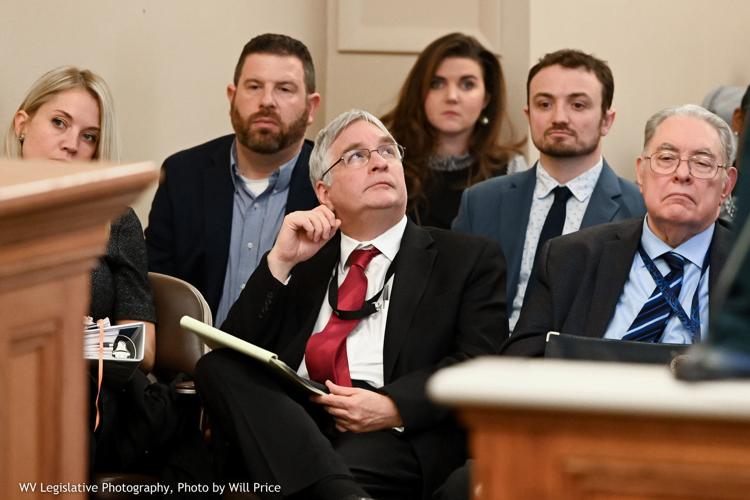
State Deputy Revenue Secretary Mark Muchow (center) listens during a Senate Finance Committee hearing on Monday afternoon. Muchow said for most West Virginia residents, getting rid of the personal property tax on vehicles and raising the consumer sales tax would probably cancel each other out.
WILL PRICE | West Virginia Legislative Photography
West Virginia state officials will not release a report that analyzes the effects of a spending bill that President Donald Trump dubbed “the Big Beautiful Billâ€� on the state.Â
With around 50% of West Virginia’s operating budget coming from federal sources, the Mountain State stands to be hurt worse than most states by federal spending reductions.
Estimates by the West Virginia Center on Budget and Policy show that, in the upcoming state budget, the state will need to spend an additional $7.5 million to take on an increase in administrative costs for the Supplemental Nutritional Assistance Program, also known as food stamps.
The spending bill also freezes tax increases on health care providers, which are used to pay for state portions of Medicaid. That could cost at least $40 million, because the state won’t have an avenue to raise more money, according to the center.Â
During a September meeting of the Joint Committee on Government and Finance, Speaker of the House Roger Hanshaw, R-Clay, asked Deputy Secretary of Revenue Mark Muchow if his office had run the numbers on the spending package.Â
State Deputy Revenue Secretary Mark Muchow (center) listens during a Senate Finance Committee hearing on Monday afternoon. Muchow said for most West Virginia residents, getting rid of the personal property tax on vehicles and raising the consumer sales tax would probably cancel each other out.
WILL PRICE | West Virginia Legislative Photography
"We have done an analysis for the governor's office on that, yes,â€� Muchow replied.Â
“If that's an analysis you'd be willing to share, we'd benefit from that,â€� Hanshaw said.Â
A month later, Hanshaw and Senate President Randy Smith, R-Preston, had the report.Â
Gov. Patrick Morrisey’s office, the Department of Revenue, the House and the Senate all refused to release the report. They all invoked language in West Virginia’s Freedom of Information Act that allows agencies to withhold “internal memoranda or letters received or prepared� by government agencies.
The state Supreme Court has ruled that language allows — but does not require — agencies to keep secret “advice, opinions and recommendations,� even if those materials were sent from one agency to another. West Virginia law also allows agencies to be transparent with the public by releasing such materials.
The denial issued by Morrisey’s office shined some light on the scope of the report.Â
“It reflected Mr. Muchow’s evaluative judgment and analysis of the significance of various aspects of the One Big Beautiful Bill and its impact on the state of West Virginia,â€� wrote Katie Franklin, deputy general counsel, in her denial letter.Â
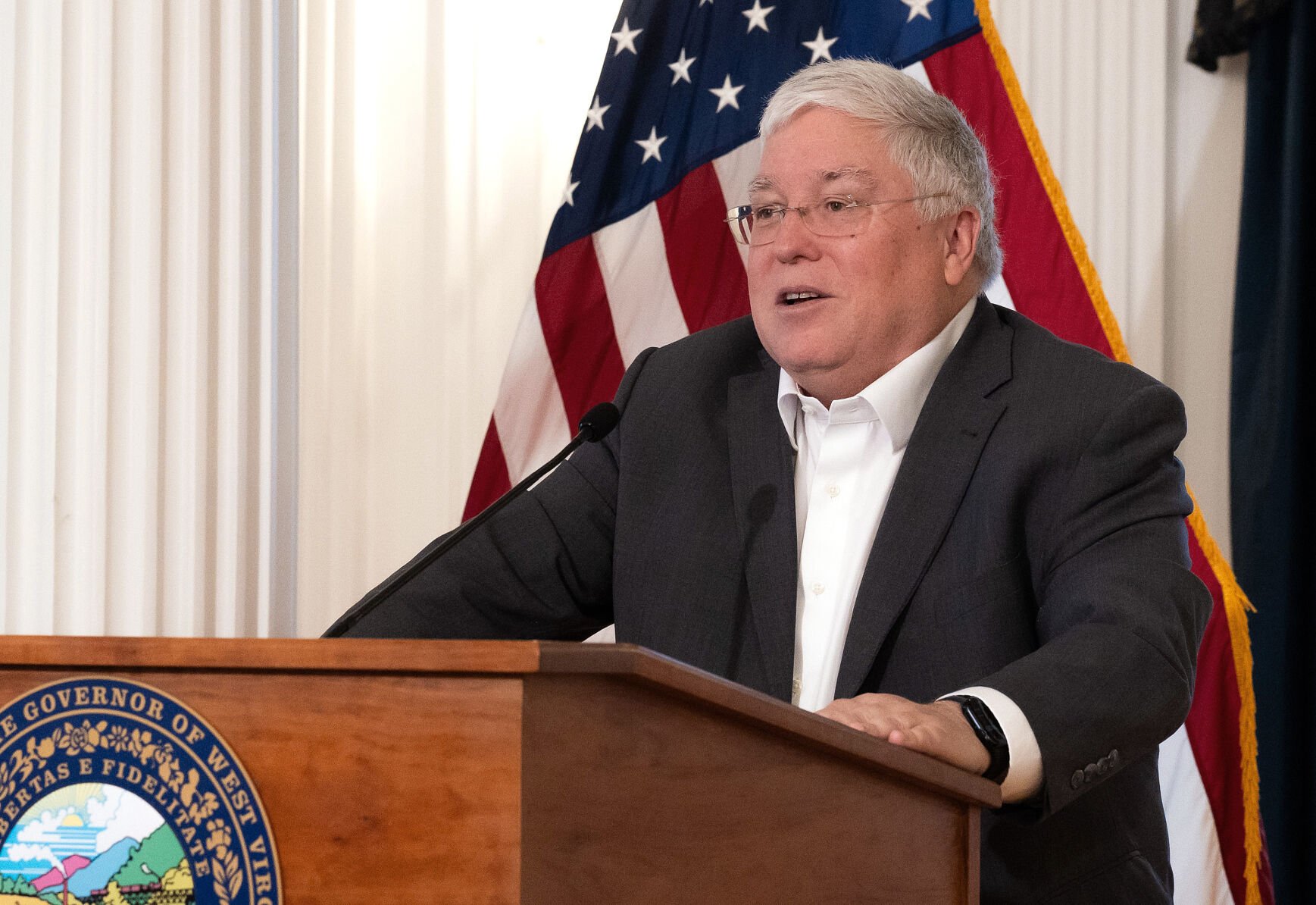
Gov. Patrick Morrisey speaks to reporters on Dec. 11, 2025, at the Governor's Office in the West Virginia Capitol in ÂÒÂ×ÄÚÉä.
GOVERNOR'S OFFICE | Courtesy photo
At a news conference on Friday, when Mountain State Spotlight asked Morrisey about the report, he said, “You're going to see the results of that on Jan. 14, when I submit my budget, that'll start to give you a better sense in terms of some of the changes.â€�Â
Loss in funding means some of West Virginia's neediest could get hurt. Over the next decade, 55,000 West Virginians could lose their Medicaid insurance. And an estimated 30,000 families with children could lose food assistance in the state.Â
This story was originally published by Mountain State Spotlight. Get stories like this delivered to your inbox once a week by signing up for their free newsletter at mountainstatespotlight.org/newsletter.